
- Home
- About us
- News
- Events
- EXPORT Export
- BUY Buy
- INVEST Invest
- COUNTRY BRAND Country Brand
-
INFORMATION CENTER
Information center
InformationCenterInformationCenterReports Country reports Department reports Foreign trade reports Product-Destination worksheet Sectors reports Work documentsStatistical information Classification Uruguay XXI Exports Imports Innovative National Effort Macroeconomic Monitor Tools Buyers Exporters Investors
- Contact
-
Languages
From Distribution to Regional Services: Why the Pharmaceutical Industry Chooses Uruguay
Industry leaders highlighted stability, talent, and logistics as key factors for operating in regional markets
 Publication date: 16/11/2026
Share:

Merck’s expansion of operations, DHL’s acquisition of Aerocargas, and Gramón Bagó’s plan for a new export-focused plant illustrate different aspects of the pharmaceutical and logistics industries’ commitment to Uruguay. Behind these decisions, industry representatives identified common factors such as the stability needed for long-term planning, the talent required to take on new roles, and the conditions necessary to serve regional markets from within the country.
These experiences were shared during the seventh edition of Uruguay Best Practices in Pharma Supply Chain, which brought together more than 350 national and international leaders. Organized by the Uruguay Pharma Hub Group, Uruguay XXI, and the National Institute of Logistics (INALOG), the event brought together companies, government officials, specialists, and representatives from academia to analyze the challenges and opportunities in the pharmaceutical supply chain.
Merck Uruguay’s track record illustrates how a logistics operation can expand into other activities. Its general manager, Gabriela Brancato, explained that, during its 30 years of operations in Uruguay, the company transitioned from receiving pre-packaged medications to performing secondary packaging for the region—from Mexico to Argentina. It subsequently added a regulatory affairs hub and a shared services center handling finance, procurement, and human resources.
“All these activities were gradually incorporated as the country demonstrated what it has to offer,” noted Brancato, who attributed this growth to social, economic, and political stability, as well as to the capabilities of local teams. “Uruguay stands out for its service-oriented approach,” she affirmed, highlighting the staff’s willingness to review processes and find more agile and efficient ways of working.
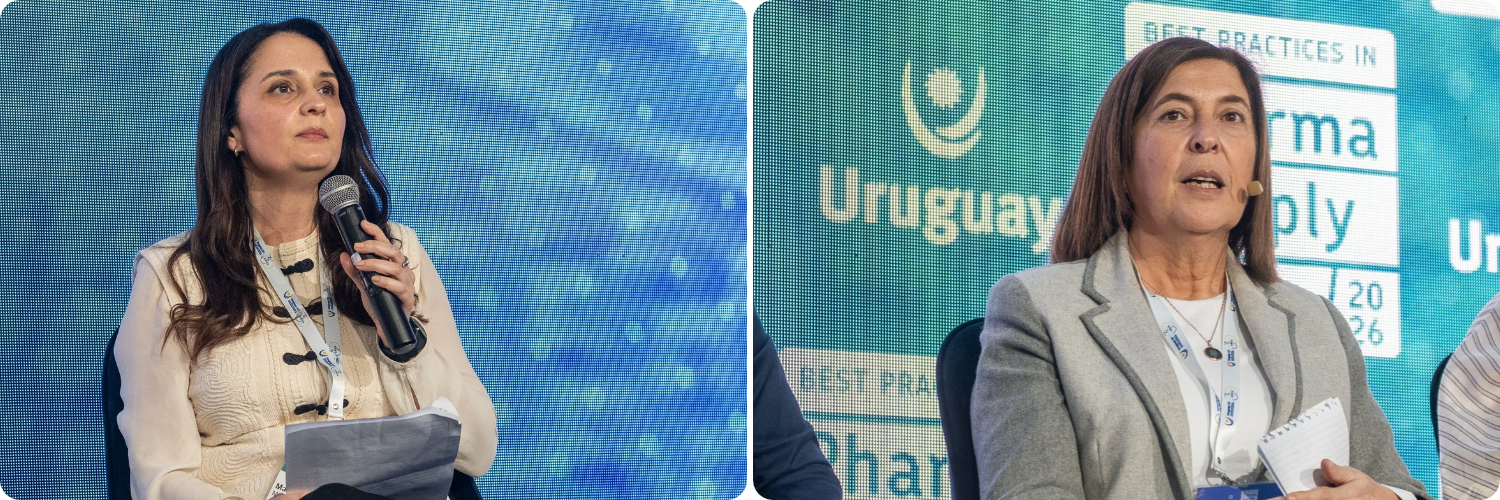
She encouraged companies considering setting up operations in the country to experience it firsthand. “Come to Uruguay and see for yourselves the opportunities and strengths that both the government and companies here have achieved” she said.
Proximity to markets was another key theme in the testimonials. Claudia Roa, Global President of the Life Sciences and Healthcare sector at DHL Group, explained that a priority for companies worldwide is to locate their inventories closer to their customers. In this context, she highlighted Uruguay’s role as a regional distribution hub due to its location, ports, and airports, as well as its regulatory stability and the advantages offered by free trade zones.
The recent acquisition of Aerocargas—a long-standing strategic partner of DHL—fits into this strategy. Roa noted that the transaction fully integrates the local team into the group and ensures the continuity of its air, sea, customs, and ground services, including its operations in the healthcare sector. “We’re investing here because we see the potential for growth,” she said.
For pharmaceutical production, predictability takes on a special significance. Álvaro Bellini, general manager of Laboratorios Gramón Bagó, explained that the company is planning a new plant with an export focus and has submitted the proposal to the Investment Law Enforcement Commission (COMAP).
“These investments aren’t meant for just one or two years; they’re meant for the next 30 to 40 years,” he said. For Bellini, the factors in Uruguay that support these decisions are talented human resources, tax benefits, and the stability needed for long-term planning.
“Uruguay is a country that shines at night,” he said, explaining what sets the country apart when investors compare destinations in Latin America. That assessment was also reflected in his outlook for the future. “Uruguay is a better place than many countries—if not all countries in Latin America—to plan for the future,” he said.
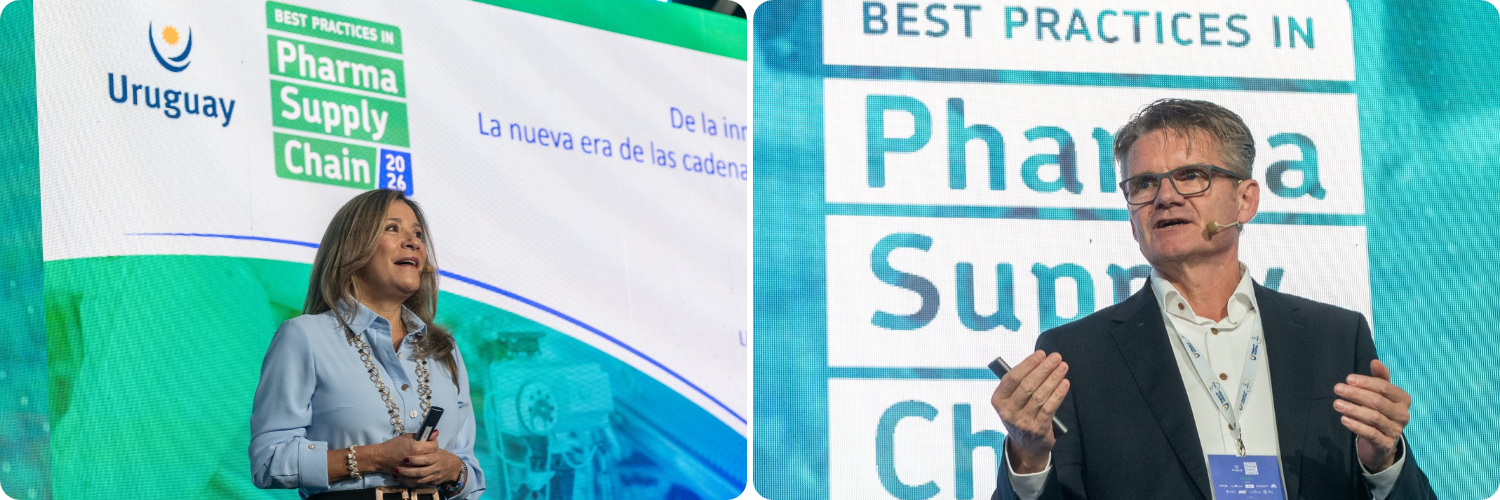
Regional business management is also part of the activities that companies carry out from Uruguay. Leticia Mantiñán, Supply Chain Coordinator for Uruguay, Paraguay, and Bolivia at Boehringer Ingelheim, explained that the country serves as the hub for human and animal health operations across those three markets. She linked this role to the country’s stability and geographic location—which allows for travel to Asunción and Santa Cruz de la Sierra in just a few hours—and highlighted the availability of talent to carry out various operational tasks.
Eric Ten Kate, Global Sector Leader – Healthcare at CEVA Logistics, highlighted Uruguay’s location and the infrastructure available to serve regional markets. “From here, we can distribute to southern Latin America and also to Brazil,” he noted. In his view, the lower utilization of infrastructure compared to Brazil offers greater operational capacity and facilitates business development.
With operations that supply the region, teams that manage various markets, and new investment projects, Uruguay has a solid foundation for expanding its participation in the international pharmaceutical supply chain. These initiatives demonstrate the capabilities the country offers to companies seeking to establish or expand their operations and serve their customers in Latin America from here.