
- Home
- About us
- News
- Events
- EXPORT Export
- BUY Buy
- INVEST Invest
- COUNTRY BRAND Country Brand
-
INFORMATION CENTER
Information center
InformationCenterInformationCenterReports Country reports Department reports Foreign trade reports Product-Destination worksheet Sectors reports Work documentsStatistical information Classification Uruguay XXI Exports Imports Innovative National Effort Macroeconomic Monitor Tools Buyers Exporters Investors
- Contact
-
Languages
Mercosur–EU Agreement Opens New Opportunities for Uruguay’s Pharma Hub
The “Uruguay Best Practices in Pharma Supply Chain” event examined opportunities for trade, investment, and integration
 Publication date: 23/09/2026
Share:
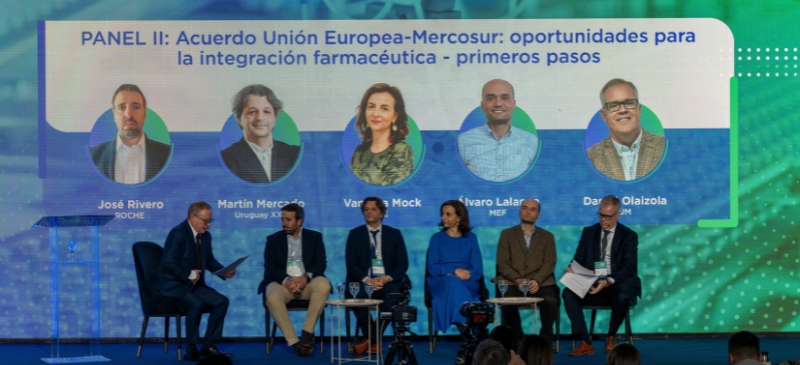
The Mercosur–European Union Agreement broadens the bloc’s horizons for international integration and opens up new possibilities for Uruguay’s pharmaceutical sector—an industry that already maintains strong logistical ties with Europe and markets throughout the region. The opportunities and challenges posed by this new landscape were discussed during the seventh edition of Uruguay Best Practices in Pharma Supply Chain, which brought together public and private sector leaders involved in trade, investment, and the supply chain.
Martín Mercado, deputy executive director of Uruguay XXI, highlighted the significance of the agreement for Mercosur. As he explained, as of April 30, the bloc’s existing trade agreements covered economies representing approximately 8% of global GDP. With the entry into force of the agreement with the European Union, that coverage rose to around 20%.
For Uruguay XXI, the challenge is ensuring that this greater openness translates into concrete opportunities for companies. In this context, the agency developed the Mercosur–European Union Agreement Portal, which compiles information on tariff reductions, requirements, and conditions of access, and is complemented by market analyses and technical support to facilitate the full utilization of the agreement.
“The pharmaceutical sector has been growing; we’ve seen significant momentum from the end of last year to the present, and moving forward, we’d like to see more investment and more interested European companies,” said Mercado.
The opportunity also stems from an established logistics network. During the panel discussion on this topic, José Rivero, Roche’s Head of International Trade Affairs and Customs Regulation for Latin America, noted that nearly 45% of pharmaceutical shipments passing through Uruguay originate in the European Union. Of that volume, about 75% is redistributed throughout the region, and 60% is destined for Mercosur countries.
The data shows a supply chain that already connects Europe with regional markets via Uruguay. For Rivero, the challenge lies in “not settling for what’s already in place,” but rather leveraging that foundation to expand operations and develop new opportunities for the sector.
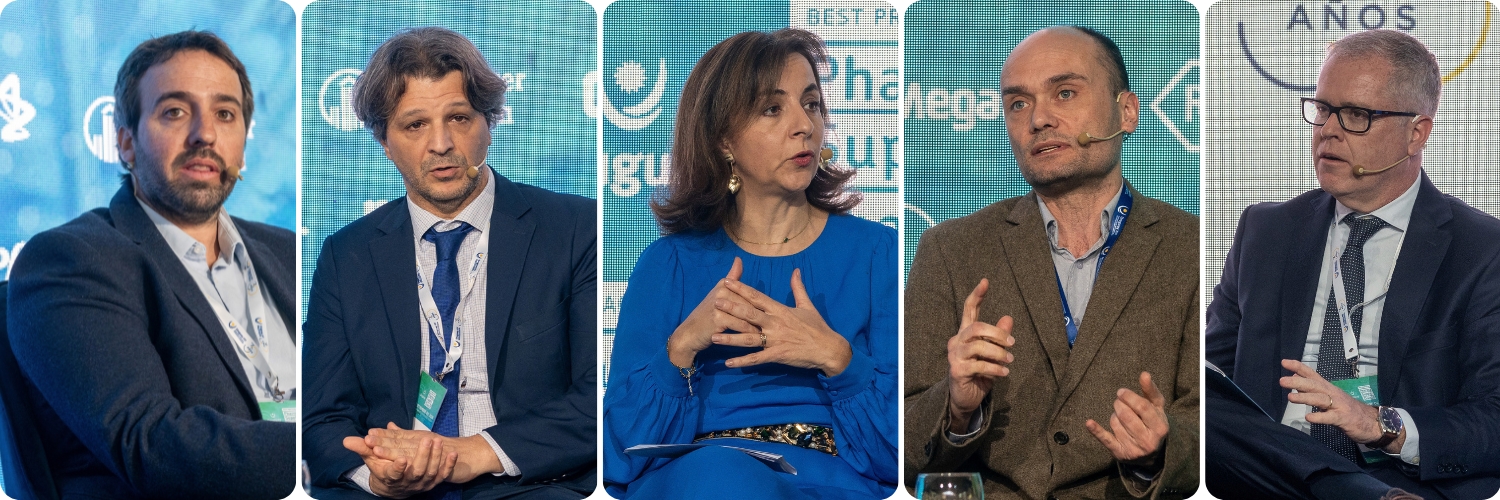
From a European perspective, Vanessa Mock, head of the Trade and Economy Section for Uruguay and Paraguay at the European Union Delegation, emphasized that the agreement offers opportunities that go beyond tariff reductions. After 25 years of negotiations, the new framework incorporates advances in trade facilitation, harmonization of rules, services, investment, and mutual recognition mechanisms—elements of particular relevance to a highly regulated industry.
“Uruguay can position itself as a regional hub,” said Mock. Among the country’s strengths, she highlighted institutional and legal certainty, free trade zones, and the capabilities developed by the industry, and noted that one of the challenges is to increase the visibility of Uruguay and its pharmaceutical sector in the European market.
Taking advantage of these opportunities will also depend on companies’ ability to incorporate the new rules into their operations. Daniel Olaizola, a partner at Sucesores de Miguel Ángel Castro, noted that preferences must be analyzed on a product-by-product basis, taking into account aspects such as tariff classification and rules of origin, and he emphasized the importance of having adequate guidance to effectively utilize the available benefits.
Álvaro Lalanne, advisor to the Minister of Economy and Finance and head of the Competitiveness and Business Environment division, focused on the conditions supporting Uruguay’s development as a regional distribution hub. He noted that the country must continue to adapt its competitiveness and trade facilitation tools—with progress in simplifying and digitizing procedures and in health regulations—to support new operations and investments.
The discussion highlighted a favorable starting point for Uruguay, with an industry that has established capacity, a logistics network that already connects Europe with Mercosur, and a new trade framework that expands opportunities for integration.
“Uruguay Best Practices in Pharma Supply Chain” is organized by the Uruguay Pharma Hub Group—comprising Adium Pharma, AstraZeneca, Boehringer Ingelheim, GlaxoSmithKline, Mega Labs, Merck, Pfizer, and Roche—with the support of Uruguay XXI and the National Institute of Logistics (INALOG). Declared a matter of national interest by the Office of the President, the event also addressed digital transformation and cybersecurity, the cold chain, resilience, and talent for the industry’s future.