
- Home
- About us
- News
- Events
- EXPORT Export
- BUY Buy
- INVEST Invest
- COUNTRY BRAND Country Brand
-
INFORMATION CENTER
Information center
InformationCenterInformationCenterReports Country reports Department reports Foreign trade reports Product-Destination worksheet Sectors reports Work documentsStatistical information Classification Uruguay XXI Exports Imports Innovative National Effort Macroeconomic Monitor Tools Buyers Exporters Investors
- Contact
-
Languages
A new and innovative vaccine plant puts Uruguay on the biotechnology map
With an investment of US$4 million, Terovet develops a project in Montevideo that shows how Uruguay is strengthening its conditions in order to attract and scale up investments in the life sciences with an international reach.
 Publication date: 29/04/2026
Share:
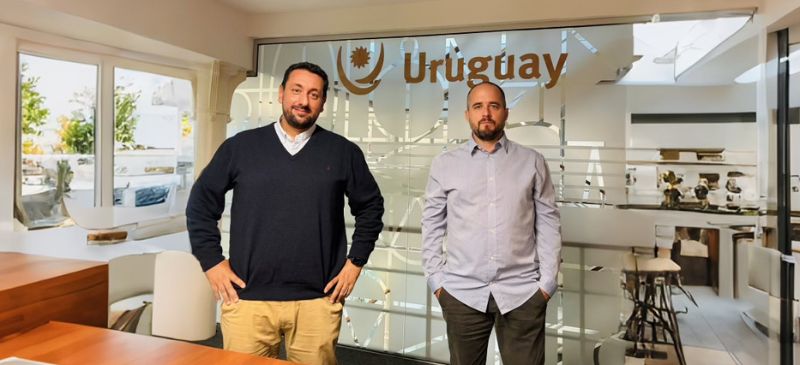
In 2023, three professionals with more than two decades of experience in the veterinary pharmaceutical industry decided to leave management positions at a multinational company to launch a new biotechnology venture from Uruguay. The team, with a track record in vaccine development and production—including stints at the Prondil laboratory and later at the multinational MSD—identified a specific opportunity to leverage that expertise locally. That is how Terovet was born.
“There was a wealth of valuable knowledge that was being lost in the country, and we saw an opportunity to preserve and develop it from Uruguay,” said Rafael Costoya, managing partner of the company alongside Pablo Espósito and Julio Guarnaschelli.
After an initial phase providing consulting services to foreign laboratories—which included partnerships with companies in Latin America, Africa, and other markets—the company moved toward building its own biotechnology plant, currently under development in Montevideo, which will begin operations in September 2026.
“We decided to set up this plant in Uruguay, initially focused on animal health, but with a vision for the future that also includes human health,” added Costoya.
The project aims to address the lack of capacity to scale biotechnological developments to an industrial level, a gap identified within the local sector.
“Today there are biotechnological developments in Uruguay, but there is no infrastructure to bring them to industrial production,” explained Espósito.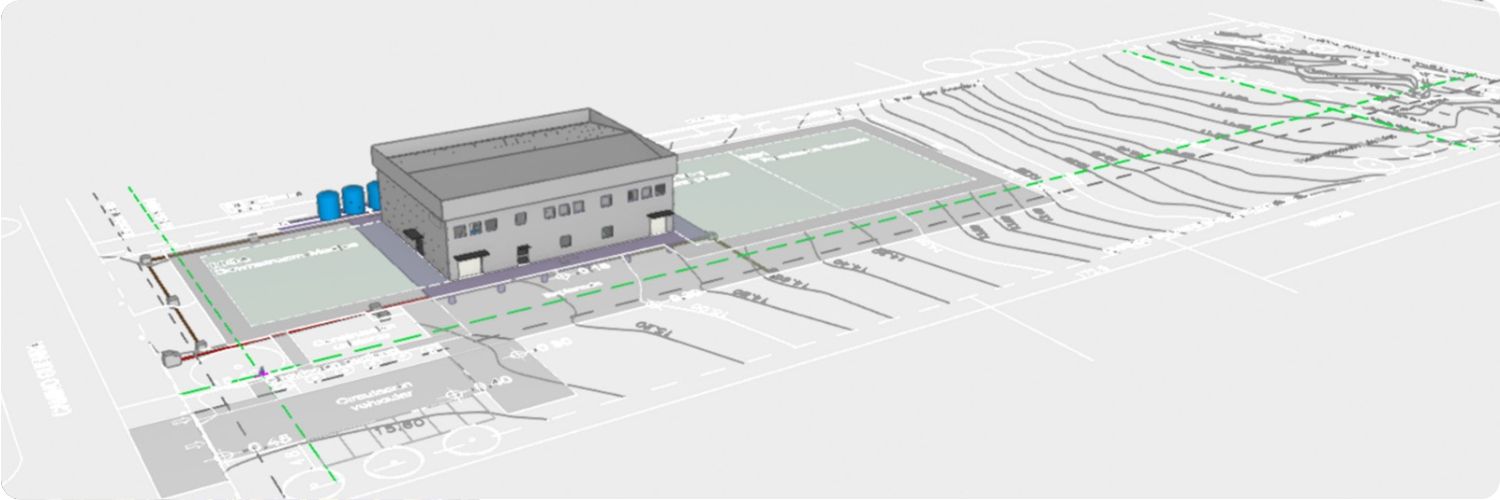
From Research to Industrial Scale-Up
The facility will enable the production of innovative vaccines for animal health while also offering manufacturing services under the CDMO (Contract Development and Manufacturing Organization) model, which is widely used in the global industry.
This approach combines in-house development with contract manufacturing and responds to a growing trend: the outsourcing of development and manufacturing capabilities to specialized operators.
“We are a plant that produces for other companies, mainly for emerging markets where costs are the real challenge,” noted Costoya.
This positioning will allow us to serve segments where large companies face greater operational difficulties. “There we saw a very good opportunity: to be able to produce using our technology and bring products at competitive prices to markets where it is currently difficult to operate,” he added.
In turn, the plant is positioned as a platform for the local sector. “We want to offer our capacity to companies that develop products but have nowhere to manufacture them on an industrial scale,” explained Espósito.
This ranges from scaling up startup developments to production for multinationals, with whom the company already has identified clients and commercial progress in various regions.
At the same time, the model includes mechanisms to begin generating revenue in the early stages of the project through the production of components that do not require complex regulatory processes.
An export-focused model
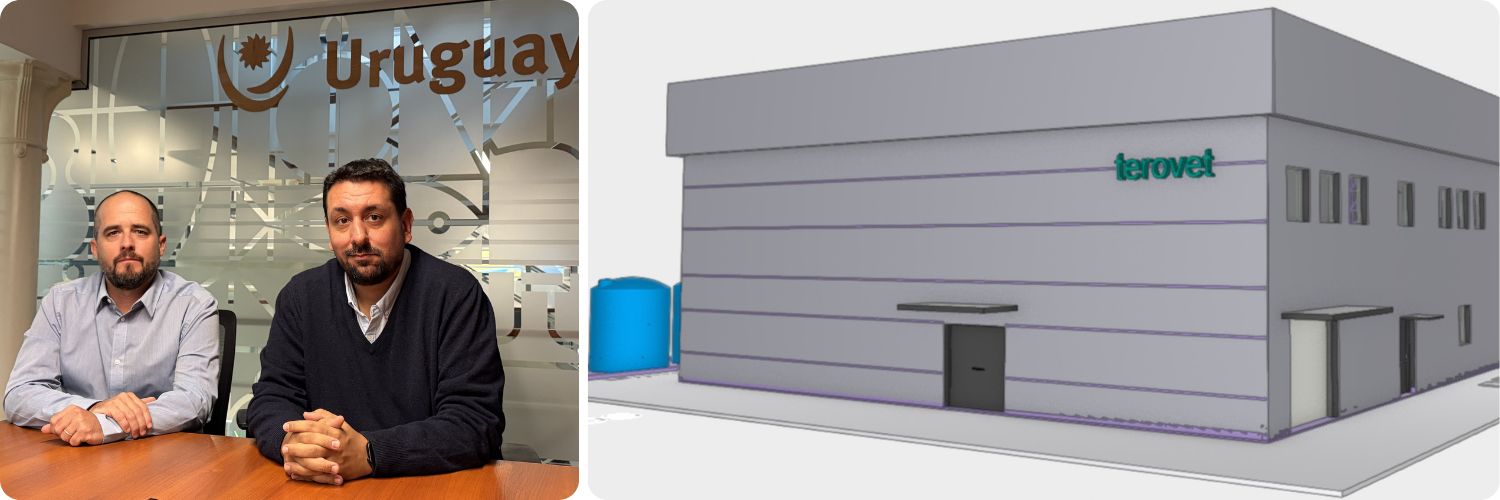
The export focus is central: between 80% and 85% of production will be destined for international markets. The company initially plans to supply Latin America, Africa, and the Middle East—regions where it already has experience and established ties.
“Our main objective is to export. Access to international markets is essential for the growth of this industry,” stated Costoya.
In its initial phase, the plant will have the capacity to produce up to 20 million doses of complex vaccines annually, with the possibility of modular expansion in the future.
“The project was designed from the outset with growth potential in mind. We have the ability to increase our production capacity up to sevenfold through new investments,” he added.
In addition to conventional technologies, the company incorporates advanced platforms, such as the development of recombinant vaccines, which expand its reach into new segments, including the pet market and, potentially, human health applications.
A growing ecosystem with investment opportunities
Terovet’s development is part of a biotechnology sector that, while still limited in scale, is showing increasing dynamism. More than 60 biotechnology companies currently operate in Uruguay, of which nearly two-thirds are startups focused on developing innovative solutions with global reach, according to the study Biotechnology Companies in Uruguay: Productive, Technological, and Economic Characteristics of a Growing Industry, commissioned by Uruguay XXI, the National Agency for Research and Innovation (ANII), and the Inter-American Development Bank (IDB).
However, one of the sector’s main challenges remains the transition from research to production.
In this context, Terovet’s investment adds a key link in the value chain, opening up new possibilities for both local startups and international companies.
“The idea is that those developing solutions in Uruguay can scale up industrially and access international markets without relocating,” explained Costoya.
In turn, the project positions itself as a key player in addressing specific production challenges, such as the development and manufacturing of biotechnology solutions applied to the agricultural sector.
Why Uruguay
The decision to carry out this project in Uruguay is driven by structural factors that are also evident throughout the rest of the sector.
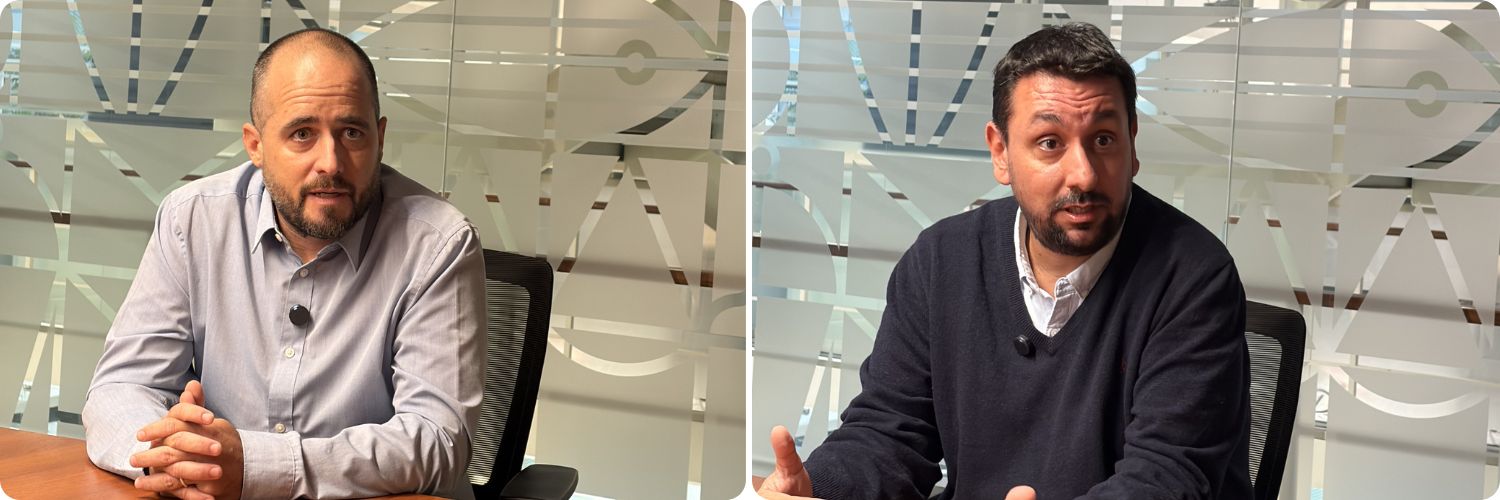
“Uruguay has a highly qualified workforce and a solid scientific foundation, which is essential for this type of project,” Espósito noted.
The country combines the availability of technical and scientific talent, experience in vaccine production, and an institutional environment characterized by economic and legal stability.
Added to this is an expanding scientific ecosystem and conditions that facilitate the validation of solutions in areas such as animal health.
In this context, Uruguay is beginning to position itself as a platform for the development, scaling, and production of biotechnology with international reach.
A Case That Highlights an Opportunity
Terovet’s journey demonstrates how a consolidated knowledge base can be transformed into an industrial investment in biotechnology from Uruguay, connecting local scientific capabilities with global opportunities.
At the same time, it highlights a broader opportunity: the possibility of investing in an expanding sector, with available talent and room to develop productive infrastructure.
In a highly regulated environment—where development and authorization processes require expertise and a long-term perspective—the combination of technical knowledge, industrial capabilities, and market access positions the country as a key destination for this type of investment.
“The potential is there. Uruguay has what it takes to establish itself as a biotechnology hub,” concluded Espósito.