
- Home
- About us
- News
- Events
- EXPORT Export
- BUY Buy
- INVEST Invest
- COUNTRY BRAND Country Brand
-
INFORMATION CENTER
Information center
InformationCenterInformationCenterReports Country reports Department reports Foreign trade reports Product-Destination worksheet Sectors reports Work documentsStatistical information Classification Uruguay XXI Exports Imports Innovative National Effort Macroeconomic Monitor Tools Buyers Exporters Investors
- Contact
-
Languages
"Uruguay Is an Island of Stability in Latin America"
International investors highlight Uruguay's stability, talent, and potential for regional growth
 Publication date: 27/11/2026
Share:
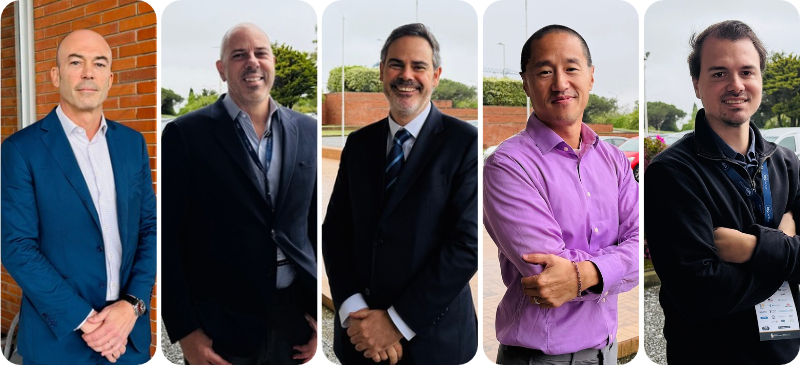
Economic and institutional stability, skilled talent, and opportunities to build internationally competitive businesses are among the strengths that foreign investors see in Uruguay. Five private capital leaders shared these perspectives in interviews with Uruguay XXI during the second edition of the Private Capital Forum, held on October 8 at LATU's Innovation Park.
The event brought together investment funds, business leaders, and international experts to discuss financing, innovation, and growth opportunities in Latin America. The interviewees highlighted the factors that set Uruguay apart in the region and its potential to attract new investment.
Stability as an advantage for long-term investment
“We want to invest in Uruguay,” said Eric Acher, co-founder and managing partner of Brazilian venture capital firm Monashees, one of Latin America's leading venture capital investors. He noted that the firm continues to actively explore opportunities in the country.
Acher also highlighted Uruguay's ability to provide predictability in a region often marked by uncertainty. “It's almost like Uruguay is an island of stability,” he said. In his view, this environment allows entrepreneurs, investors, and policymakers to take a longer-term perspective, an essential factor in developing a strong technology and venture capital ecosystem.
José Mestres, a partner at Patria, an international alternative asset manager with a regional hub in Montevideo, shared that assessment. “Having consistent rules of the game is a major advantage,” he said, emphasizing that Uruguay's institutional and macroeconomic stability sets it apart from other Latin American markets and makes it an attractive base for regional investment.
Luiz Medina, managing partner and chairman of the Board of Directors of BTG Pactual Uruguay, explained how stability influences capital allocation decisions. “When you have a stable country that offers greater long-term visibility, it will always be a preferred place to invest,” he said.
Miguel Campos, from Brazilian venture capital firm Canary, also expressed interest in expanding investments in Uruguay. “I'm very keen on investing more in Uruguay because I think the macro stability helps a lot and attracts a lot of investors to the country,” he said.
From a U.S. perspective, Ted Yang, entrepreneur and ProductMind representative, noted that while investors are prepared to take on the risks associated with funding startups, they place particular value on a predictable political and economic environment. “They want good startups, they want good innovation [...] but they want it in an environment where they know they can get their money in and out,” he explained.
Skilled talent and a global mindset
Although Uruguay's domestic market is relatively small, its size can encourage entrepreneurs to think internationally from the outset. Campos emphasized the country's combination of talent, entrepreneurial ambition, and macroeconomic stability.
“Uruguay has an opportunity here because you do have great talent, ambitious people,” he said. For founders building businesses in Uruguay, international expansion needs to be part of the strategy from day one. “In Uruguay, you need to think globally from the beginning.”
Acher shared that perspective, noting that Uruguay has already produced notable technology companies relative to the size of its domestic market.
Human capital was another strength highlighted by Medina. “The caliber of the people here is very high,” he said, pointing to Uruguayans' educational background and the readiness of young professionals to work for global companies.
Yang, meanwhile, praised the collaborative environment he encountered among local entrepreneurs, investors, and institutions. During his visit, he met people working to build innovative technology companies with ambitions to expand across Latin America.
The U.S. entrepreneur also noted that Uruguay remains relatively unfamiliar to many American investors. He suggested that greater international awareness could help showcase the country's commitment to innovation and the collaborative nature of its business environment.
“If people knew more about it, they would have an understanding that you have a government here and the people here that are willing to work on innovation,” Yang said, also highlighting the country's safety and supportive business community.
A regional business hub with an attractive quality of life
Uruguay's potential as a base for regional operations was another recurring theme.
According to Medina, BTG Pactual's presence in Uruguay is part of a broader strategy to strengthen business connections across the Southern Cone, particularly with Argentina, Brazil, and Paraguay.
Medina also expressed the bank's interest in expanding its operations in Uruguay. He highlighted the strength of its local team and the growth opportunities the institution sees in the market.
Mestres likewise identified Uruguay as a potential gateway for international investors seeking to expand across Latin America. Its stability, skilled workforce, and opportunities in sectors such as infrastructure, logistics, and agribusiness contribute to that positioning.
Patria's own experience illustrates this role. The firm has operated in Uruguay since 2021 and maintains one of its regional hubs in Montevideo, employing approximately 30 to 40 professionals across corporate functions and investment teams. According to Mestres, Patria was already investing in activities linked to Uruguay before establishing its local team, particularly in infrastructure and inland waterway transportation.
Based in Montevideo himself, the Spanish executive also spoke about his personal experience. “I've always loved Uruguay. It's a very welcoming country, the people are very friendly, and it's safe, stable, and comfortable,” he said. He also praised its connections to other regional business centers, describing Uruguay as something of an oasis of tranquility within Latin America.
Quality of life was also a key point for Medina, who believes it remains underappreciated among investors from more distant markets. Safety, skilled professionals, and favorable living and working conditions make Uruguay an attractive destination for both international companies and individuals considering relocating abroad.
Acher also emphasized the opportunities that international entrepreneurs bring to Uruguay's technology ecosystem. His message to investors unfamiliar with the country was to visit, build relationships with founders and investors, and explore the opportunities firsthand. “We have to be here,” he concluded.