
- Home
- About us
- News
- Events
- EXPORT Export
- BUY Buy
- INVEST Invest
- COUNTRY BRAND Country Brand
-
INFORMATION CENTER
Information center
InformationCenterInformationCenterReports Country reports Department reports Foreign trade reports Product-Destination worksheet Sectors reports Work documentsStatistical information Classification Uruguay XXI Exports Imports Innovative National Effort Macroeconomic Monitor Tools Buyers Exporters Investors
- Contact
-
Languages
Design, Craftsmanship, and Identity: What International Fashion Buyers Found in Uruguay
U.S. buyers and a Mexican specialist reviewed the offerings from 25 Uruguayan brands
 Publication date: 25/11/2026
Share:
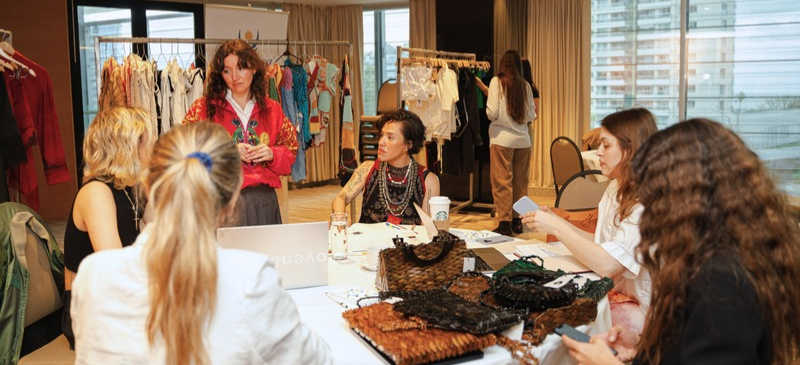
Artisanal production, natural materials, attention to detail, and brand identity were among the attributes most highly valued by the international industry leaders who visited Uruguay to learn about its fashion sector. During a new business roundtable organized by Uruguay XXI, U.S. buyers and a Mexican specialist discovered Uruguayan design concepts with the potential to reach new markets.
The event, held on November 17 in Montevideo, brought together 25 Uruguayan brands specializing in clothing, footwear, accessories, and jewelry, which participated in 32 business meetings. The initiative provided an opportunity to showcase collections, exchange experiences, and explore international marketing opportunities.
The participating brands were Ana Livni, Babila, Be Ganesha, Celmo, Charlie Xray, Clara Aguayo, Coppelia, Floralia, GIA, Jiboia, Kapsul, Loria Studio, Lucy in the Sky, Majo Rey, Mandinga, Manos del Uruguay, Ound, Pastiche, Penthesilea, Plan Be, Polonio, Rosa Rosa, Savia, Sofía Buysan, and The Farra. The diversity of offerings brought together brands with an international track record and emerging startups looking to take their first steps into foreign markets.
What Sets Uruguayan Fashion Apart in International Markets
“These aren’t mass-produced items. There’s a truly unique quality to some of these pieces,” noted Rachel MacAskill, buying manager at TENET, a multi-brand boutique with locations in Southampton and East Hampton, New York, that features collections from emerging designers and established international brands. Among the items that caught her eye, she mentioned knitwear, crochet, linen, and handcrafted embroidery.
For MacAskill, this uniqueness meets a specific market demand. “Our customers are always looking for something they can’t find anywhere else, and that’s a quality I see in some of the collections I’ve discovered,” she noted.
A similar assessment was shared by Aliza Tran, head of buying and operations at Sunroom, a women’s fashion and accessories boutique located in Malibu, California, specializing in a selection of independent designers. The buyer highlighted the details in the garments and the use of artisanal techniques that preserve traditions. She also identified commercial opportunities for products made from wool, leather, and linen, due to their versatility and adaptability to different markets.
As part of the experience, the visitors took part in a tour of the Uruguayan wool production chain, organized in collaboration with the Uruguayan Wool Secretariat (SUL). Tran particularly highlighted the transparency of the processes. “You can trace practically every stage, something I didn’t know before,” she explained.
Mexican designer and consultant Mónica Mendoza Bravo, director of MTHRSHP—a creative and strategic consulting firm specializing in fashion and design—offered another perspective on the value of national design. With experience at international firms such as Fendi and Calvin Klein, Mendoza highlighted the human dimension of Uruguayan production processes.
“There’s a sense of humanity and community that’s extremely important and that translates into the product,” she said. As she explained, the time devoted to craftsmanship, the quality of the materials, and the work of the people behind each creation are key attributes for standing out on the international stage.
From the First Business Contact to International Expansion
The session brought together companies at different stages of internationalization, ranging from brands that already market their products abroad to startups just beginning to explore export opportunities.
The Farra, which specializes in locally designed and produced clothing, shared its experience in international markets. After participating in U.S. and European trade shows with support from Uruguay XXI, the brand secured sales in Asia following its appearance at Tranoï in Paris. “We are immensely proud that they chose our products, our raw materials, and our quality,” said its founder, Tini Marckowicz.
For its part, Rosa Rosa, a brand of leather shoes and handbags, highlighted the importance of trade promotion tools for reaching new customers. Its founder and creative director, Pilar Abreu, noted that participating in trade shows and business matchmaking sessions allowed the brand to begin its journey into international wholesale sales.
For Kapsul, an emerging Uruguayan brand specializing in knitwear and denim, the event marked its first foray into the export process. Its designers highlighted the opportunity to understand the expectations of international buyers and prepare for future business ventures.
The agenda continued on November 18 with Uruguay Collective & Beyond, an event that brought together Uruguayan brands and designers with international industry leaders. The day included a panel featuring U.S. buyers, who shared their insights on opportunities in the U.S. market, consumer trends, and the criteria they use to select brands and products for their stores.
In addition, Mónica Mendoza Bravo led the masterclass “Identity in Action: From a Unique Perspective to a Brand with Meaning, Consistency, and Value,” in which she addressed how to translate a brand’s identity into concrete decisions regarding positioning, product, pricing, and communication to compete in international markets.
The business roundtable and complementary activities are part of Uruguay XXI’s efforts to connect Uruguayan design with international buyers and facilitate Uruguayan brands’ access to new markets.