
- Home
- About us
- News
- Events
- EXPORT Export
- BUY Buy
- INVEST Invest
- COUNTRY BRAND Country Brand
-
INFORMATION CENTER
Information center
InformationCenterInformationCenterReports Country reports Department reports Foreign trade reports Product-Destination worksheet Sectors reports Work documentsStatistical information Classification Uruguay XXI Exports Imports Innovative National Effort Macroeconomic Monitor Tools Buyers Exporters Investors
- Contact
-
Languages
Uruguay’s independent fashion labels build momentum in New York
Six Uruguayan brands brought distinctive design, materials and a growing wholesale ambition to Brand Assembly
 Publication date: 21/09/2026
Share:
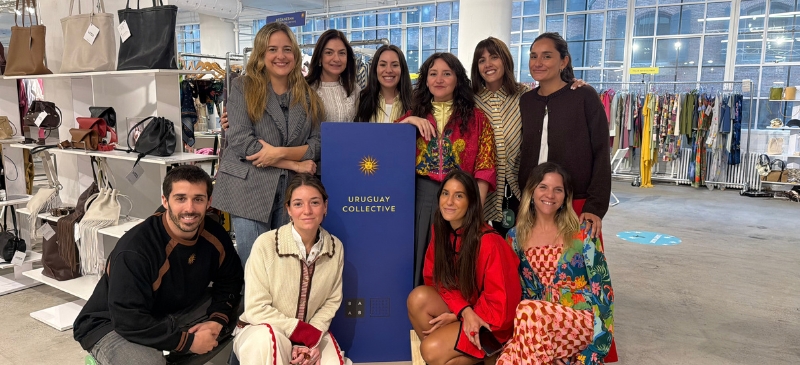
Six brands, six different creative languages, one point of origin. At Brand Assembly New York, Margo, Savia, Celmo, BeGANESHA, Loria Studio and Feel Nomade presented a cross-section of contemporary Uruguayan fashion, spanning womenswear, knitwear and denim to leather goods, swimwear and resort.
Presented under Uruguay Collective, the brands arrived in New York with distinct identities but a shared goal: to build relationships with international buyers and translate visibility into long-term wholesale opportunities. For several of them, the latest edition also provided something particularly valuable in fashion: evidence that consistency pays off.
For Celmo, returning to Brand Assembly for the third time meant reconnecting with buyers who had already discovered the label. “Several clients who came last time returned, and some bought even more than before,” said co-founder Antonella Scaldaferri. “For us, the most important thing is to build loyalty, stay in touch and maintain that relationship throughout the year.”
The brand’s signature prints and cotton pieces were among the elements attracting attention on the floor. Across the collective, buyers responded to different expressions of design and materiality. At Margo, knitwear, denim, blouses, textile manipulation and color stood out, while Savia drew interest with the prints from Biomas, a collection inspired by Uruguay’s landscapes, wildlife and natural environment.
“The prints really caught people’s attention,” said Lucía Peón, designer of Savia. Linen remains central to the brand’s proposition, reworked beyond its traditional association with summer into pieces designed for different settings and moments of the day.
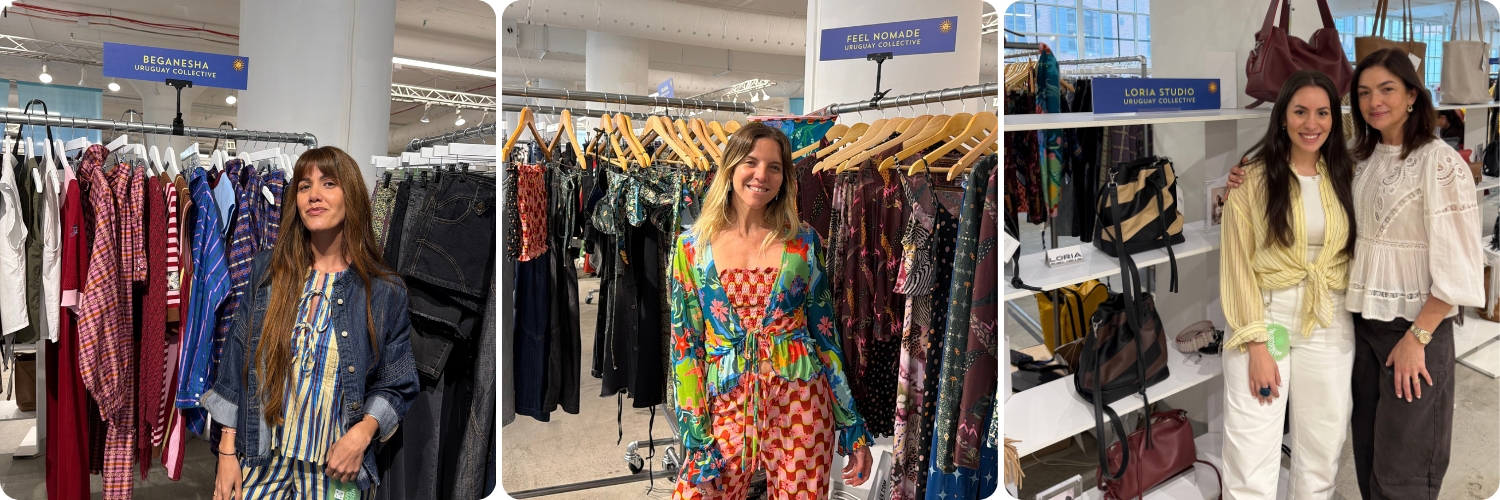
At Loria Studio, the conversation shifted to leather and detail. Studs and fringes became focal points in the latest collection, but founder María Victoria López said buyers repeatedly highlighted another feature: the quality of the leather. The label combines contemporary shapes with an understated classicism, creating handbags designed to elevate a look while remaining relevant beyond a single season.
Feel Nomade, meanwhile, expanded its swimwear universe with resort pieces conceived to work across a summer wardrobe. “You can play with the bikinis and one-pieces and create a much more complete summer look,” said founder Clara Cantarelli. Original prints and color remain part of the label’s visual signature, while the new resort offer allows buyers to build broader assortments around the collection.
For BeGANESHA, cotton and denim generated some of the strongest interest. Founder Agustina Paoletti describes the brand as urban, colorful, playful and versatile, and sees the New York experience as both a commercial opportunity and a learning curve. “It feels like moving to another level and starting again from zero, with a lot to learn and different rules,” she said.
That learning process is also central to Margo Baridon’s approach to international growth. “A buyer may like a brand the first time, but they want to see consistency and understand how it evolves from season to season,” she said. “Markets are developed by showing up year after year.”
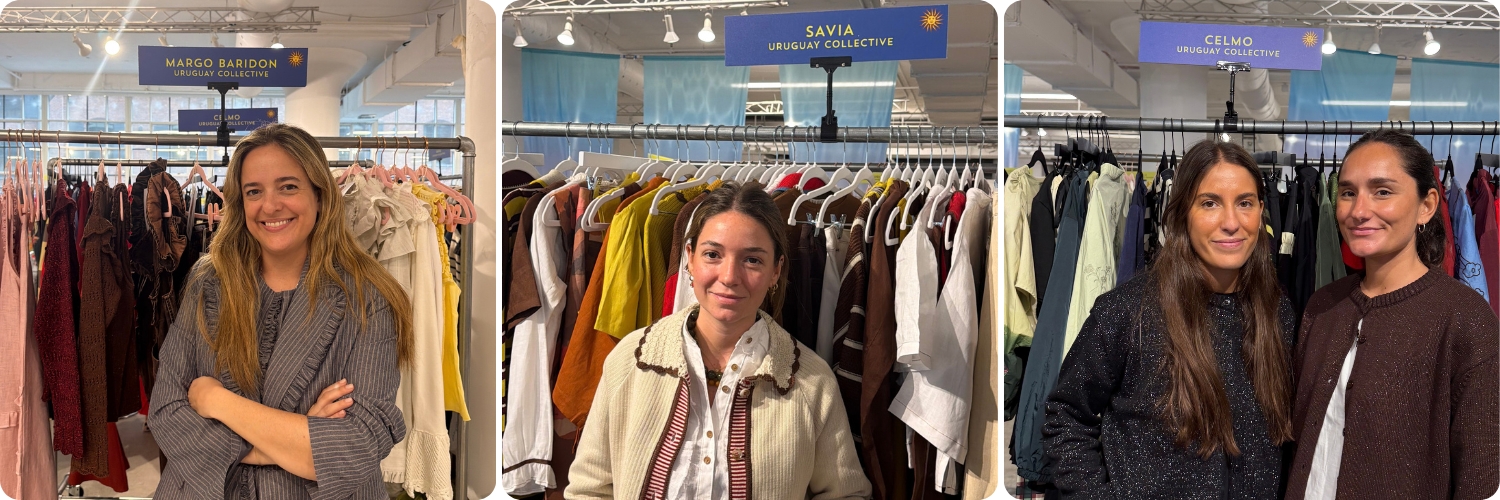
For international buyers, that continuity offers a chance to see not only finished collections but how the brands mature, respond to market feedback and refine their point of view. Baridon describes Margo’s perspective as a vision of the Latin American woman “from the South”: feminine but active, drawn to color and detail, and looking for quality without excess.
Together, the six labels illustrate a fashion ecosystem that is difficult to reduce to a single aesthetic. What connects them is a close relationship with product, materials and design, combined with an increasing focus on international business.
Supported by Uruguay XXI, Uruguay Collective provides a curated entry point for buyers looking beyond established fashion capitals for independent labels with identifiable design languages and growing international ambitions. After New York, the work continues where wholesale relationships are ultimately built: through follow-up, reorders, market knowledge and repeated contact.
Participation in Brand Assembly is part of Uruguay XXI’s broader strategy to support the international growth of the country’s fashion sector. The next stop will be Tranoï in Paris, October 1–4, followed in November by the Uruguay Fashion Trip 2026, organized with the Uruguayan Wool Secretariat (SUL), which will bring international buyers closer to the brands’ origins, materials, workshops and production processes.