
- Home
- About us
- News
- Events
- EXPORT Export
- BUY Buy
- INVEST Invest
- COUNTRY BRAND Country Brand
-
INFORMATION CENTER
Information center
InformationCenterInformationCenterReports Country reports Department reports Foreign trade reports Product-Destination worksheet Sectors reports Work documentsStatistical information Classification Uruguay XXI Exports Imports Innovative National Effort Macroeconomic Monitor Tools Buyers Exporters Investors
- Contact
-
Languages
Uruguay bids farewell to Ruben Rada, Country Brand Ambassador and a leading figure in its music scene
The musician had a career spanning six decades that brought Uruguayan candombe to the world
 Publication date: 27/08/2026
Share:
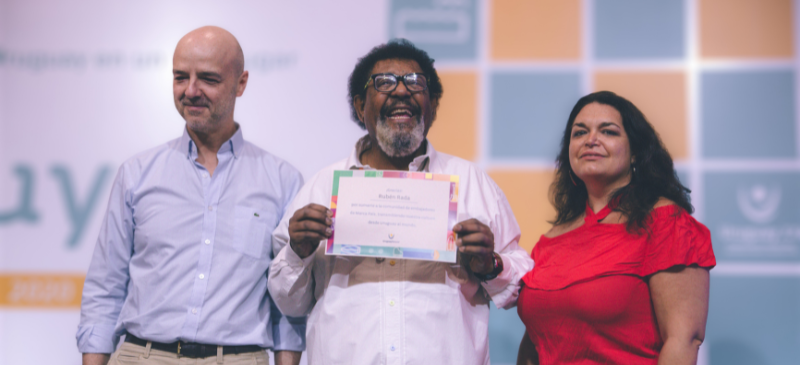
Uruguay bids farewell to Ruben “El Negro” Rada, one of the key figures of its culture and an ambassador for the country’s national brand, who died this Wednesday, August 26, in Montevideo at the age of 83. A musician, composer, singer, and percussionist, his career spanned more than six decades; he revitalized Uruguayan popular music and brought candombe to stages and audiences around the world.
His passing prompted numerous tributes and expressions of affection. The Executive Branch declared an official day of mourning for Thursday, August 27, with the national flag flying at half-staff at public buildings and diplomatic missions abroad. His remains will lie in state in the Hall of Lost Steps at the Legislative Palace.
Born in Montevideo on July 16, 1943, Omar Ruben Rada Silva discovered at a very early age the musical language that would define his life. At the age of ten, he was already performing with the Morenada troupe, the starting point of a career that would make him one of the leading figures of candombe beat—the fusion of candombe with beat music and rock that revitalized the Uruguayan music scene beginning in the 1960s.
Kinto and Tótem, two central acts of that movement, counted Rada among their leading figures. Later, he also joined Opa, alongside Hugo and Osvaldo Fattoruso, and pursued an extensive solo career.
His music achieved widespread international recognition. The albums Montevideo and Montevideo II went platinum in Uruguay and were released in markets such as Japan, France, Italy, Sweden, Germany, and the United States—a journey that made his work one of the most recognizable expressions of Uruguayan music abroad.
His ability to bridge generations was also particularly evident in *Rada para niños*, the project he developed in the late 1990s that brought thousands of children and families from Uruguay and Argentina into his audience.
Throughout his career, he received numerous awards. In 2011, the Latin Recording Academy presented him with the Latin Grammy Award for Musical Excellence for his lifetime achievement. In 2015, Berklee College of Music honored him with the Master of Latin Music Award, in recognition of his commitment to Afro-Latin music and his contributions to the music and culture of Uruguay. These were joined by several Graffiti Awards and Gardel Awards, as well as numerous tributes throughout his career.
An Ambassador for Uruguay Long Before His Appointment
Rada’s role in promoting Uruguay internationally predated any formal recognition by decades. His music had brought candombe, the language of Montevideo, and a unique Uruguayan creative style to stages across the Americas, Europe, the United States, and Asia.
This journey received institutional recognition in February 2020, when he was appointed as Ambassador for the Uruguay Country Brand. The distinction was formalized by Uruguay XXI on February 24, during the MUY Verano fair in Punta del Este, where he was introduced as one of the figures tasked with representing the country around the world.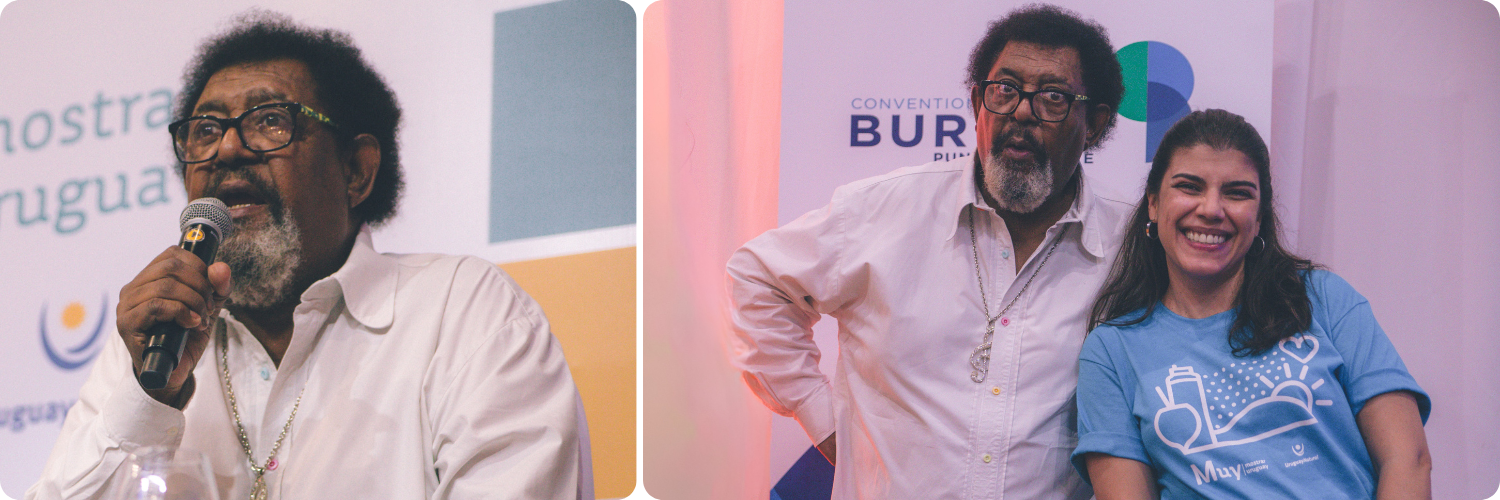
Since then, Rada has been involved with various initiatives related to the country’s cultural outreach. His role as ambassador was a natural fit for a career that blended creativity, diversity, identity, and openness to the world. Uruguay XXI’s own presentation of him as an ambassador describes him as a pioneer of the fusion of candombe, beat, and rock and highlights the international reach of his music.
One of his last major gestures as an ambassador came in August 2025, during the Bicentennial celebrations. Rada gave a concert designed for Uruguayans both at home and abroad, broadcast through embassies, consulates, and other venues for international promotion. Uruguay XXI and Marca País supported that celebration from the Uruguayan pavilion at the 2025 Osaka World Expo, where the concert was shared with the public—in what would be the last event in which they participated alongside the artist. Having lived much of his life outside Uruguay, Rada then summed up an idea that also defined his connection to the country: “We are all Uruguayans—even those of us who are abroad.”
His work leaves a mark that far exceeds awards, recordings, or stages. Rada helped transform an expression deeply rooted in Afro-Uruguayan identity into a language capable of engaging with the world without losing its origins. He did so through music, but also through a personality, a sense of humor, and a warmth that made him a recognizable figure across generations.
Uruguay XXI and Marca País bid a deeply sorrowful farewell to Ruben Rada and express their appreciation and gratitude for his having represented Uruguay through his music, creativity, and identity for so many years. They extend a special message of support to his family and loved ones at this time, with a warm embrace and gratitude for a life and body of work that are part of the country’s cultural memory.