
- Home
- About us
- News
- Events
- EXPORT Export
- BUY Buy
- INVEST Invest
- COUNTRY BRAND Country Brand
-
INFORMATION CENTER
Information center
InformationCenterInformationCenterReports Country reports Department reports Foreign trade reports Product-Destination worksheet Sectors reports Work documentsStatistical information Classification Uruguay XXI Exports Imports Innovative National Effort Macroeconomic Monitor Tools Buyers Exporters Investors
- Contact
-
Languages
Uruguayan food products are making inroads into new markets following a round of meetings with international buyers
From their first export to the opening of new markets, Uruguayan companies are making progress in their international expansion
 Publication date: 31/08/2026
Share:
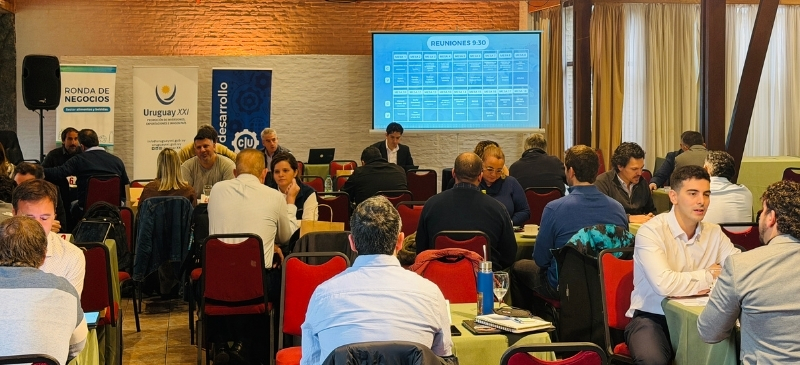
A frozen cinnamon roll that’s finished baking at home, a natural, long-shelf-life hummus, and functional foods made with hemp seeds. A variety of products and companies at different stages of international expansion came together at the Food and Beverage Business Roundtable organized by Uruguay XXI and the Chamber of Industries of Uruguay (CIU), with the shared goal of finding new markets for their products.
The event, held in early August, brought together 80 domestic companies with buyers from Argentina, Brazil, Colombia, Mexico, Paraguay, Peru, Ecuador, and the United States, for an agenda of more than 400 meetings.
From Uruguay to the First Export
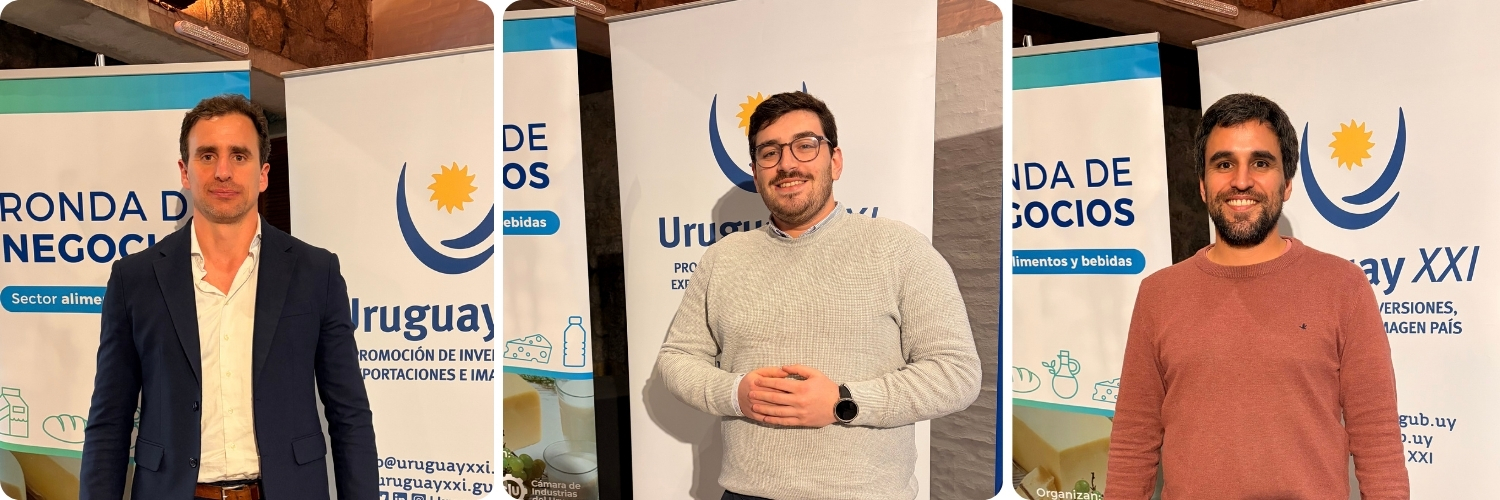
For EASY Congelados, the round was a new step on a journey that began this year, after the company consolidated its presence in Uruguayan supermarkets. The company presented its mini cinnamon rolls, apple-cinnamon rolls, and chocolate rolls, as well as a larger version intended for coffee shops and bakeries.
Brazil, Paraguay, Argentina, and Chile emerged as the first potential destinations due to their proximity and low logistics costs. “Just being able to enter a neighborhood in São Paulo or a small town is a huge opportunity for us,” explained its director, Dan Kalijmann.
The meetings also provided an opportunity to gauge buyer response to the product. “They were surprised by the nature of the product, how easy it is to eat, and how innovative the idea was,” Kalijmann said. He also noted that the challenge lies in finding the right target audience. “You don’t connect with everyone because there are different factors—issues like price and the type of consumer the buyer targets—but it’s a matter of finding the right niche to tap into the product’s potential,” he said.
To make exporting viable, EASY has already extended the shelf life of its products to 12 months and is working on other challenges related to the cold chain, costs, and volumes. The matchmaking event was the company’s first experience of this kind, and Kalijmann particularly highlighted the access to potential international clients. “The value that both Uruguay XXI and the Chamber of Industries provide in this context is truly invaluable, because it’s difficult for Uruguayan companies to connect with international buyers from truly large retail chains who are willing to dedicate half an hour of their time to listen to their proposal,” he stated.
Betabel is at a different stage; it already markets its products in Argentina and plans to begin selling in Paraguay this year. At this edition of the roundtable, the company presented its natural, long-shelf-life hummus and held meetings with buyers from Brazil and Paraguay, while also exploring opportunities in Colombia.
Its director, Gastón Cesperés, noted that the feedback received was positive and that the company continued the conversations initiated during the round to evaluate potential business opportunities. Betabel had already participated in previous editions and valued that experience as part of the learning process necessary to advance its internationalization efforts.
From Uruguayan Hemp to New Markets
Goland Hemp Food entered the round with an established export operation and the goal of expanding into new markets for its line of functional foods made with hemp seeds.
The company presented cold-pressed oil, hulled seeds, plant-based protein, peanut butter, and coffee with hemp protein, as well as its most recent launch: an alfajor made with hemp seed protein. The entire line is gluten-free and bears the Marca País seal and LSQA certification.
During the tour, Goland held meetings with buyers from Peru, Brazil, Colombia, Ecuador, and Argentina—ranging from importers specializing in gourmet products to large retail chains. The company identified Peru and Colombia in particular as offering a favorable combination of commercial interest, regulatory framework, and opportunities for short-term progress.
“There was a common thread: a lot of genuine interest in the product,” noted its sales manager, Rodrigo Gómez. However, each market presented different conditions. In Brazil, for example, regulations still limit the sale of this product category, while in other markets the challenge lies in introducing a product that is still relatively unknown.
The participation built on a track record of international expansion that had already yielded results. Goland was the first Uruguayan company to export foods made with hemp seeds and the first to enter the Argentine market with this product category.
It currently also operates in Colombia, has FDA authorization for its plant to export to the United States, and has reached an agreement with a sales platform in that market. Exports account for just under half of its revenue, while Peru and Chile are among the main markets where it seeks to expand.
This journey has been supported by various institutions at different stages. To finalize its entry into Argentina, the company worked with Uruguay XXI, the Canelones Municipal Government, the Technological Laboratory of Uruguay (LATU), the National Agency for Research and Innovation (ANII), and the Uruguayan Chamber of Industries. As part of its current expansion process, it is also participating in the “Uruguay al Mundo” program, promoted by the National Development Agency (ANDE), Uruguay XXI, ANII, LATU, and the Ministry of Industry, Energy, and Mining, within the framework of the “Uruguay Innova” program, which supports companies in their internationalization efforts.
Following the round, the company began following up on the contacts generated with specific actions tailored to each buyer’s needs. “We expect to see the first concrete progress within the next two months,” Gómez said.
For the company, one of the main benefits of these initiatives is direct access to potential business partners. “They put us at the same table as large-scale international buyers, something that would be very difficult for a company of our size to achieve on its own,” he noted.
The three pathways represent different stages of the same journey: preparing for a first export, consolidating nearby markets, or bringing a Uruguayan innovation to new destinations. In all cases, the meetings allowed the company to gauge its offerings against international buyers and define the next steps for advancing in each market.