
- Home
- About us
- News
- Events
- EXPORT Export
-
BUY
Buy
BuyBuyFood and beverage Beef Caviar Dairy Products Fruits Healthy foods Olive oil Processed Foods Rice Sweets, honey and jams Wines ICT Software development Technology products
- INVEST Invest
- COUNTRY BRAND Country Brand
-
INFORMATION CENTER
Information center
InformationCenterInformationCenterReports Country reports Department reports Foreign trade reports Product-Destination worksheet Sectors reports Work documentsStatistical information Classification Uruguay XXI Exports Imports Innovative National Effort Macroeconomic Monitor Tools Buyers Exporters Investors
- Contact
-
Languages
International Clean-Tech Firm Selects Uruguay for World-First Biogas-to-SAF Project
Set to launch in Durazno in 2028, the project leverages Uruguay’s nearly 100% renewable grid, agricultural biogas, and strong investment ecosystem to supply international markets
 Publication date: 09/03/2026
Share:
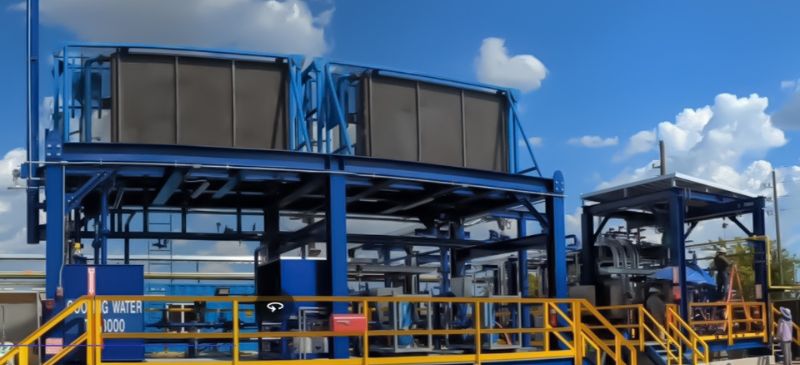
As the global aviation industry faces growing pressure to cut emissions, Uruguay has been chosen as the platform for the world’s first commercial plant capable of converting electrified biogas into sustainable aviation fuel (SAF)—a project expected to set a new benchmark in clean energy development.
The facility, named NovaSAF-1, will be built in the department of Durazno, will involve an investment of US$ 60 million, and is set to begin production in 2028. It will have an annual capacity of 350,000 gallons, and 100% of its output has already been committed for export through a six-year agreement with Trafigura, one of the world’s largest energy trading companies. The deal secures the fuel’s commercial pathway from the outset and supports the project’s financing.
U.S.-based Syzygy Plasmonics, an international technology company developing solutions to decarbonize the chemical industry, selected Uruguay for the project after an evaluation process that included multiple potential destinations. According to Suzanne Foti, Vice President of Public Affairs at Syzygy Plasmonics, the country stood out for the combination of energy, industrial, and institutional conditions required for a project of this scale and technological sophistication.
“Uruguay distinguished itself through a competitive and well-aligned set of national strengths identified during a comprehensive site-selection process,” she said. “The country’s nearly 100 percent renewable electricity grid, the availability of biogas from established agricultural operations, and a stable, transparent regulatory environment together created a strong platform for advanced sustainable fuel production.”
Taken together, she added, these factors positioned Uruguay as a competitive, reliable, and forward-looking destination for this investment.
NovaSAF-1 will be developed alongside the facilities of Estancias del Lago, one of Uruguay’s leading agricultural companies. The plant will combine biogas generated from manure waste with renewable electricity from Uruguay’s national grid—widely recognized for being nearly 100% clean. Through this process, the fuel produced is expected to reduce lifecycle emissions by up to 90%.
The final fuel will be fully compatible with today’s aircraft fleet and can be blended directly with conventional jet fuel, making it an immediate solution for markets seeking to lower aviation’s carbon footprint without requiring modifications to aircraft or existing infrastructure.
The technology itself is also a key differentiator. The plant will incorporate light-activated chemical reactors developed by Syzygy Plasmonics—an innovation that has already received international precertification for renewable fuels of non-biological origin. NovaSAF-1 will be the first commercial-scale deployment of this technology.
“The collaboration with Estancias del Lago provided a high-confidence pathway. They provided site access, feedstock supply, and operational integration, while also generously supporting our entry into the Uruguayan market and the Durazno community,” Foti said.
For the company behind the investment, Uruguay’s appeal went beyond its clean powermatrix and agricultural resources. During the development process, the country also offered a factor that is often decisive for technology-driven investments: strong institutional support and effective coordination between public and private stakeholders.
In this context, Foti highlighted the role played by Uruguay XXI, the country’s national investment and export promotion agency.
“Uruguay XXI has played an important role in supporting our integration into the local business community and facilitating engagement with government officials, helping us to localize and advance the project successfully,” she said.
Foti also emphasized that Uruguay provides conditions that allow complex projects to move forward quickly. “The Uruguayan business environment offers several advantages for a project like ours, including well-connected networks, flexibility, and a strong base of technical expertise,” she said. “These strengths enable project development to move quickly and effectively,” she added.
Looking ahead, the company sees room for expansion beyond this first facility. “The potential for expansion beyond this first project is also attractive. With a healthy agricultural industry and an abundance of renewable electricity, we believe there is significant untapped opportunity in Uruguay,” she said.
Beyond technical and economic indicators, Foti also pointed to the human dimension as a meaningful differentiator. “The warmth, kindness, and collaborative spirit of the people we’ve worked with have made Uruguay an exceptionally welcoming environment for investment and innovation,” she concluded.
With NovaSAF-1, Uruguay is reinforcing its position as a country committed to the energy transition and as a destination capable of attracting strategic investment, delivering frontier technology projects, and connecting them to global markets.