
- Home
- About us
- News
- Events
- EXPORT Export
-
BUY
Buy
BuyBuyFood and beverage Beef Caviar Dairy Products Fruits Healthy foods Olive oil Processed Foods Rice Sweets, honey and jams Wines ICT Software development Technology products
- INVEST Invest
- COUNTRY BRAND Country Brand
-
INFORMATION CENTER
Information center
InformationCenterInformationCenterReports Country reports Department reports Foreign trade reports Product-Destination worksheet Sectors reports Work documentsStatistical information Classification Uruguay XXI Exports Imports Innovative National Effort Macroeconomic Monitor Tools Buyers Exporters Investors
- Contact
-
Languages
Mercosur and the European Union sign free trade agreement that will boost Uruguay’s international projection
The agreement between both blocs creates one of the world’s largest free trade areas and opens up new opportunities for exports, investment, and Uruguay’s positioning as a reliable partner in global markets.
 Publication date: 19/01/2026
Share:
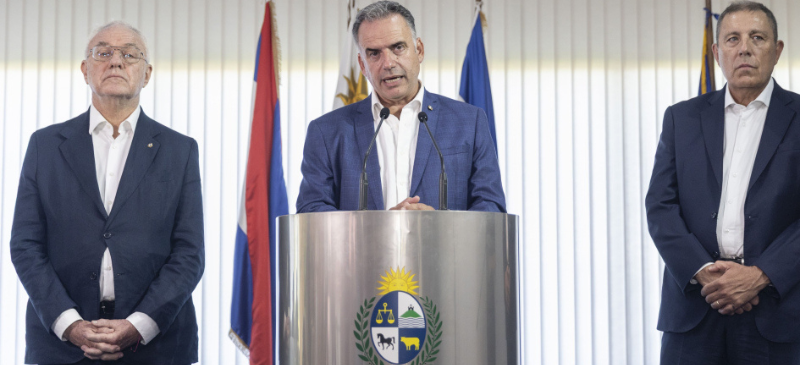
Mercosur and the European Union have reached an association agreement and an interim trade agreement that marks a milestone in integration between the two regions and strengthens ties between South America and Europe. The agreement consolidates a framework for economic, political and trade cooperation encompassing more than 700 million people and representing nearly 20% of global GDP.
This new scenario positions Mercosur as a bloc with greater global reach and opens a window of strategic opportunities for Uruguay, both in terms of market access and the attraction of investment and job creation.
According to estimates by the Ministry of Economy and Finance (MEF), the agreement with the European Union could generate an increase of up to 1.5 percentage points in Uruguay’s GDP, accompanied by an estimated 4% growth in goods exports, a 0.5% increase in employment, and improvements in real wages of close to 1%.
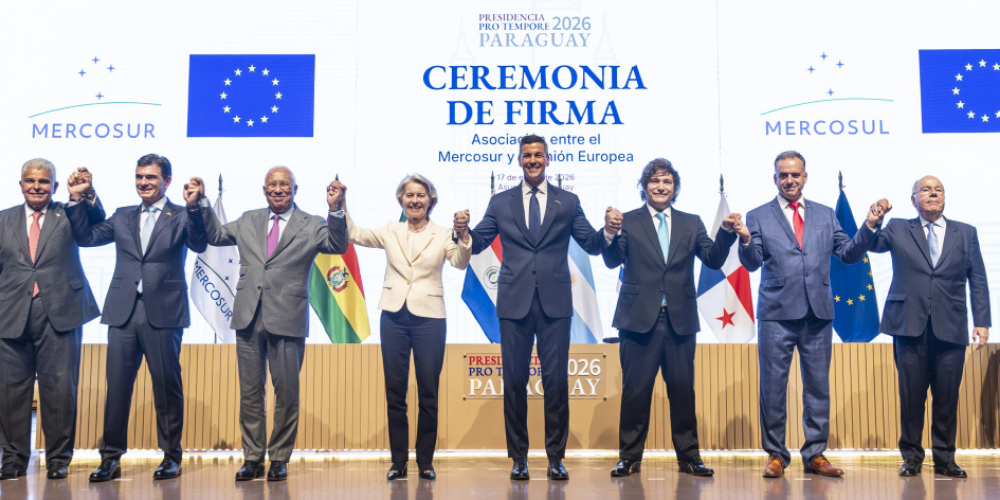
The European Union is already one of Uruguay’s main trading partners. In 2025, goods exports to the bloc exceeded USD 1.8 billion, with products such as pulp, beef, rice, soybeans, wool and timber among the leading exports. In addition, the European Union stands as the main source of foreign direct investment, accounting for 46% of Uruguay’s FDI stock in 2024.
The agreement provides for the elimination of tariffs on more than 90% of bilateral trade, as well as preferential conditions for other products. This will enhance the competitiveness of Uruguayan companies in one of the world’s most demanding and sophisticated markets and further strengthen Uruguay’s positioning as a reliable, competitive and open partner.