
- Home
- About us
- News
- Events
- EXPORT Export
-
BUY
Buy
BuyBuyFood and beverage Beef Caviar Dairy Products Fruits Healthy foods Olive oil Processed Foods Rice Sweets, honey and jams Wines ICT Software development Technology products
- INVEST Invest
- COUNTRY BRAND Country Brand
-
INFORMATION CENTER
Information center
InformationCenterInformationCenterReports Country reports Department reports Foreign trade reports Product-Destination worksheet Sectors reports Work documentsStatistical information Classification Uruguay XXI Exports Imports Innovative National Effort Macroeconomic Monitor Tools Buyers Exporters Investors
- Contact
-
Languages
RCI Highlights Uruguay as a Reliable Regional Hub After More Than 20 Years Operating from Zonamerica
Institutional stability, bilingual talent, and a predictable operating framework explain why the U.S. multinational RCI has consolidated its regional center for Latin America and the Caribbean in Uruguay
 Publication date: 07/01/2026
Share:
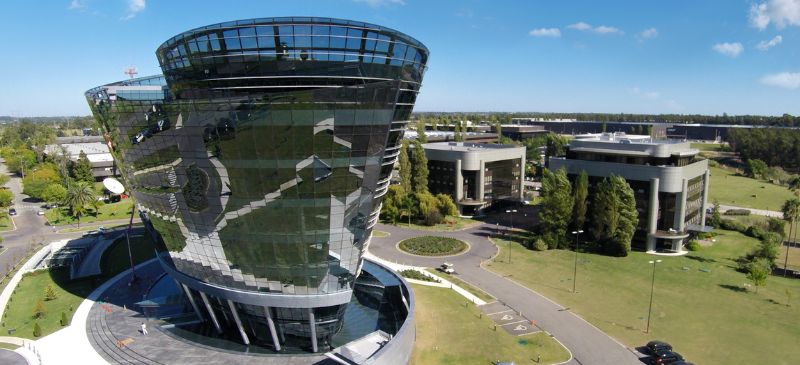
“In more than 20 years in Uruguay, there has not been a single incident that has compromised the stability of our operation.” The statement comes from Andrés Natalevich, Director of Operations for Latin America and the Caribbean at RCI, the world’s largest vacation exchange network, and sums up one of the main attributes that led the company to choose — and continue operating from — the country as its regional base.
RCI, a U.S. company with more than 50 years of experience and a pioneer in the timeshare exchange model, operates all of its services for Latin America from Montevideo, at the Zonamerica business park.
In an interview published by Zonamerica, Natalevich reviewed the factors behind the strategic decision to establish operations in Uruguay more than two decades ago and why that positioning remains valid today. “It’s not just one element, but a combination that is difficult to replicate in the region,” he said.
Talent, free zone regime, and stability
One of the main differentiators, according to Natalevich, is human capital. Almost half of RCI’s regional operations are focused on Brazil, which requires customer service in Portuguese at native standards. “Today we have more than 150 guides who are bilingual or native Portuguese speakers — something that is practically unique outside Brazil,” he noted.
This is complemented by Uruguay’s free zone regime, which provides a clear operating framework, stable rules, and a mature services ecosystem — key factors for a service-based company. The third pillar is the country’s stability: “predictable rules, functioning institutions, and an environment that allows for long-term planning,” he said.
Zonamerica as an international platform
RCI has been operating in Zonamerica for two decades. From Uruguay, it coordinates operations for markets as diverse as Mexico, Brazil, Argentina, Chile, Colombia, and Venezuela, adapting its services to the cultural particularities of each while maintaining consistent quality. “Over time, Uruguay ceased to be just a support center and became a true engine of regional growth,” Natalevich concluded.
The RCI case reaffirms Uruguay’s position as a regional platform for global services, combining stability, talent, and a reliable business environment — key elements for attracting and retaining long-term investment.