
- Home
- About us
- News
- Events
- EXPORT Export
-
BUY
Buy
BuyBuyFood and beverage Beef Caviar Dairy Products Fruits Healthy foods Olive oil Processed Foods Rice Sweets, honey and jams Wines ICT Software development Technology products
- INVEST Invest
- COUNTRY BRAND Country Brand
-
INFORMATION CENTER
Information center
InformationCenterInformationCenterReports Country reports Department reports Foreign trade reports Product-Destination worksheet Sectors reports Work documentsStatistical information Classification Uruguay XXI Exports Imports Innovative National Effort Macroeconomic Monitor Tools Buyers Exporters Investors
- Contact
-
Languages
Uruguay and the European Union Consolidate a Digital Agenda That Promotes Investment and New Opportunities
The VI European Investment Forum in Uruguay reaffirmed the country's role as a strategic partner and reliable destination for technological development, innovation, and global services.
 Publication date: 09/12/2025
Share:
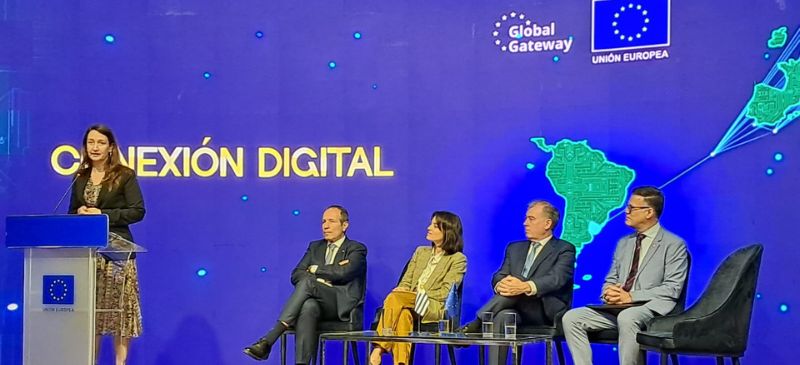
The sixth edition of the European Investment Forum in Uruguay, “Digital Connection Without Borders,” held in Montevideo, brought together authorities, business leaders, and key players in the digital economy to deepen a historic and rapidly evolving relationship. With a strong focus on digital transformation, the event highlighted investment opportunities in e-commerce, digital financial services, artificial intelligence, and cybersecurity.
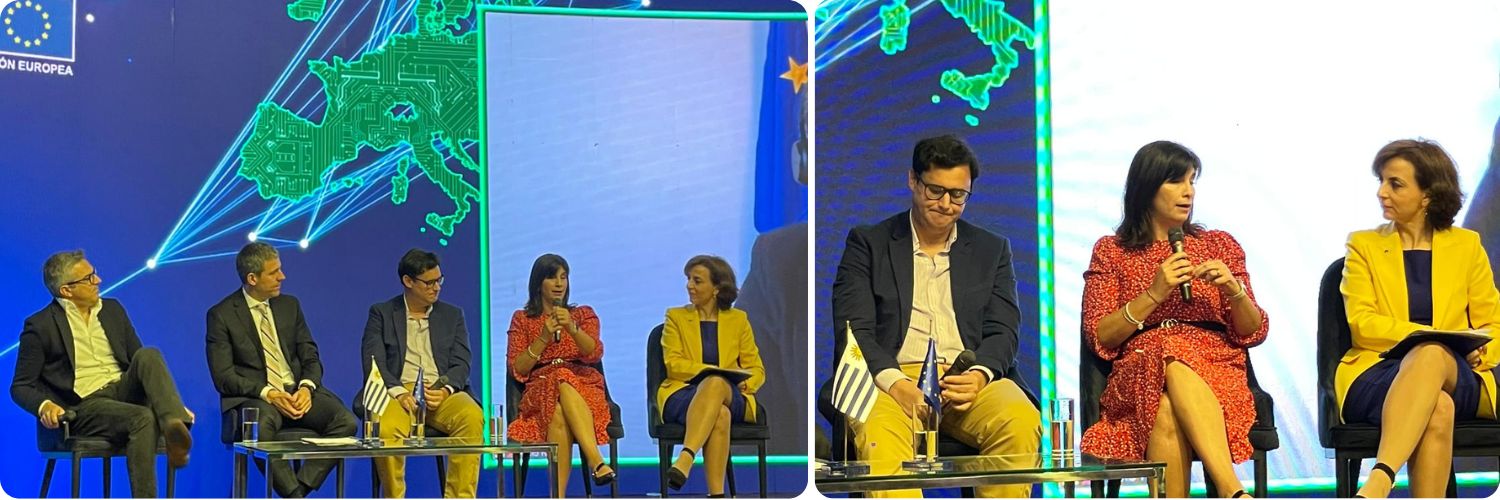
The executive director of Uruguay XXI, Mariana Ferreira, participated in the panel on digitalization and international trade, where she highlighted the country's role as a provider of global services and the importance of supporting companies in their internationalization.
Ferreira emphasized that Uruguay has developed solid capabilities to compete globally in digital and creative services, and that Uruguay XXI plays a central role in enabling that growth.
“Sixty percent of the more than 700 companies we will support this year are service companies. We support technology firms, professional services, creative industries, and startups so they can expand internationally,” she explained.
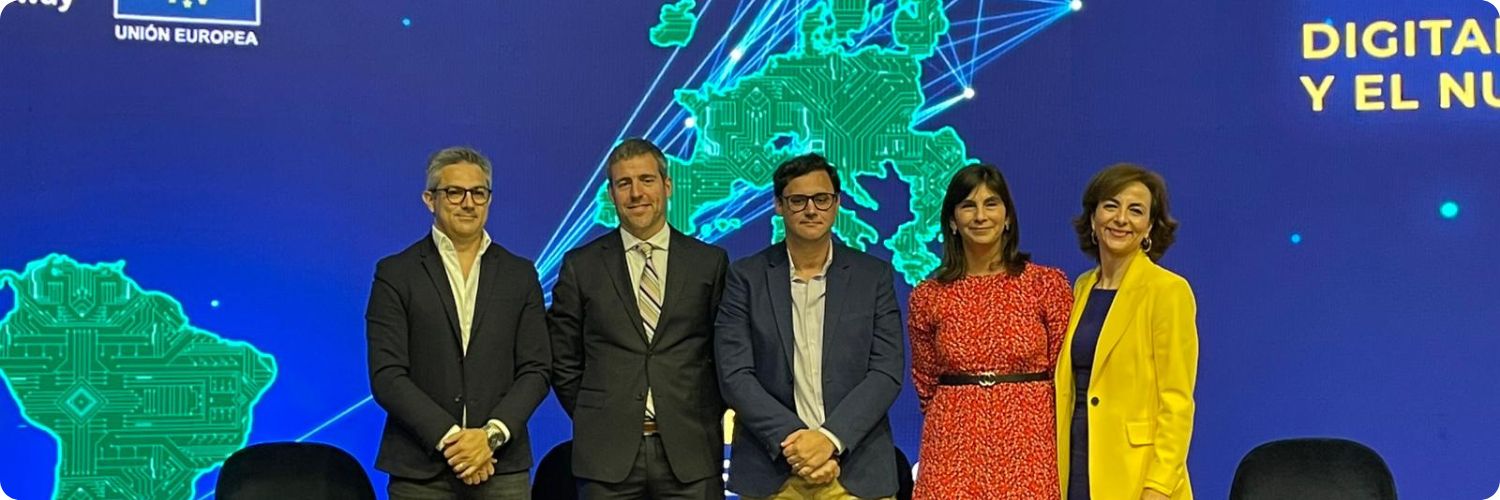
She noted that the agency promotes sector-specific platforms such as Uruguay Videogames and Uruguay Audiovisual, along with training programs and e-commerce tools designed to facilitate access to global markets.
Ferreira also highlighted significant progress in the facilitation and digitalization of foreign trade, including the integration of cross-border digital identity. Recently, VUCE Uruguay incorporated Brazil’s digital identification, enabling Brazilian citizens and companies to access more than 330 online procedures in a secure and streamlined manner. This integration represents an important leap forward in terms of trust, efficiency, and transparency.
She also underscored the progress made by the Single Window for Investments (VUI), a platform that centralizes information for domestic and foreign investors. VUI complements the work of VUCE and contributes to an increasingly agile, efficient, and competitive business environment.
“Uruguay has digital infrastructure and policies comparable to those of the most advanced countries. Our challenge is to leverage that foundation to attract more investment and open new markets for our companies,” she said.
The panel reaffirmed the conviction that Uruguay’s institutional stability, skilled talent, cutting-edge digital platforms, and secure regulatory environment position the country as a regional hub for services, technology, and innovation.
A Strategic Relationship That Continues to Deepen
The European Union is currently the main source of foreign direct investment in Uruguay, accounting for 46% of FDI stock in 2024, with around 600 European companies operating in the country. This network—built on experience, innovation, and long-term vision—was highlighted by the EU Ambassador to Uruguay, Petros Mavromichalis, who emphasized the strategic harmony between both regions.
“Uruguay is a key partner and destination for our investments. These figures reflect confidence in Uruguay as a strategic partner and the potential for joint growth in innovation and development,” he said.
“The secret to change is to build something new: Uruguay has that vocation, and the European Union wants to build that future together,” he added at the opening of the event.
Throughout the presentations, a central message emerged: Uruguay has positioned itself as a reliable and stable country with regulatory standards aligned with international best practices—conditions that make it an ideal platform for projects aimed at regional and global markets.
“Uruguay, with its stability and vision for the future, is an ideal partner for moving toward a shared digital future,” Mavromichalis noted.
Vision for the Future: Digitalization, Modern Regulation, and New Opportunities
Speakers agreed that the dynamism of the digital economy requires solid cooperation frameworks and institutions capable of keeping pace with innovation. In this context, the Undersecretary of Foreign Affairs, Valeria Csukasi, emphasized the strategic dimension of the relationship.
“There is no productive activity in Uruguay that does not have some European roots. But now we must look beyond the traditional: innovate, create new opportunities, and fully leverage what the Mercosur–European Union agreement can enable,” she said.
European representatives also stressed the importance of advancing toward common frameworks for data governance, digital signatures, cybersecurity, and artificial intelligence.
Uruguay has already achieved important milestones. It was the first country in Latin America to join the European treaty on AI, has maintained a high level of compliance with data-protection standards since 2012, and actively participates in regional initiatives in the field.
The forum also underscored strategic advances, including joint work toward an agreement on mutual recognition of digital signatures, in which Uruguay became the first country outside the EU to formally request interoperability. This move reinforces the country’s innovative vision and alignment with international digital-identity standards.
These developments are supported by a sustained national digital policy, which has consolidated a robust ecosystem of digital identity, online services, and e-government recognized for its quality and comparable to European best practices.
Together with Uruguay’s strong technological infrastructure and widespread digital culture, these advances reinforce the country’s position as a hub for global services, innovation, and digital trade.
A Business Ecosystem Transforming for Global Competition
For the private sector, the Forum provided an opportunity to exchange experiences on digitalization, business models, talent, and emerging challenges such as competition from global platforms and the integration of artificial intelligence at scale.
The president of Eurocámara Uruguay, Andrés Burghi, highlighted the importance of continuing to strengthen economic ties.
“We are convinced that European investment will continue to grow. We are united by historical and cultural ties and a mutual trust that are decisive when it comes to investing,” he said.
Representatives from technology and digital commerce companies agreed that Uruguay has distinctive strengths in connectivity, talent, and stability, but must continue to advance in digital culture, innovation, and technical education to maintain its leadership.