
- Home
- About us
- News
- Events
- EXPORT Export
-
BUY
Buy
BuyBuyFood and beverage Beef Caviar Dairy Products Fruits Healthy foods Olive oil Processed Foods Rice Sweets, honey and jams Wines ICT Software development Technology products
- INVEST Invest
- COUNTRY BRAND Country Brand
-
INFORMATION CENTER
Information center
InformationCenterInformationCenterReports Country reports Department reports Foreign trade reports Product-Destination worksheet Sectors reports Work documentsStatistical information Classification Uruguay XXI Exports Imports Innovative National Effort Macroeconomic Monitor Tools Buyers Exporters Investors
- Contact
-
Languages
Uruguay consolidates its leadership in renewable energy and opens a new phase of strategic investments
With an almost entirely clean power mix and rapidly expanding green hydrogen and electric mobility projects, the country closes 2025 by reaffirming its position as a reliable and competitive platform for clean energy investment in the region
 Publication date: 29/12/2025
Share:
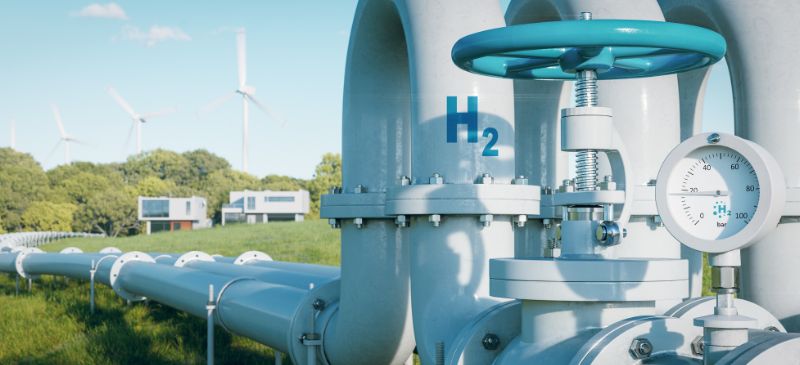
By the end of 2025, Uruguay has established itself as one of the most consistent examples of energy transition in Latin America and as a benchmark destination for investment in renewable energy and related technologies. In a regional context marked by sustained growth—investment in renewable energy in Latin America rose by 18% in 2024 to reach US$44 billion, according to the International Renewable Energy Agency (IRENA)—the country stands out for combining scale, stability, and a clear roadmap toward decarbonization.
After successfully completing an initial transition that transformed its electricity mix into one of the cleanest in the world, Uruguay is now advancing into a second phase focused on transport, industry, and the production of green hydrogen derivatives. This new stage does not start from scratch, but builds on a robust, reliable, and competitive power system—one of the country’s main strategic assets for attracting long-term investment.
Today, 99% of electricity generation comes from renewable sources, allowing industrial and commercial operations to run on clean energy from the outset. This is complemented by sustained international recognition: Uruguay’s electricity system is regarded as the highest quality in Latin America and ranks among the world’s top eight in energy performance, according to the World Economic Forum. Coverage reaches 99.8% of households, and a transmission network designed with built-in redundancy ensures security of supply. Supported by this installed capacity and its interconnections with Argentina and Brazil, Uruguay has moved from being a net energy importer to a net exporter, further strengthening system resilience.
The most strategic long-term commitment, however, lies in the development of green hydrogen and its derivatives. With outstanding combined wind and solar potential, water availability, access to biogenic CO₂ sources, and a well-developed logistics infrastructure, Uruguay is emerging as a competitive producer at the global level. Estimated production costs for 2030—between US$1.2 and US$1.4 per kilogram—place the country on par with leading international benchmarks.
Learn more about the sector in the Uruguay Renewable Energy Report
Flagship projects shaping the next stage
Progress in Uruguay’s second energy transition is materializing through a portfolio of large-scale projects that position the country at the forefront of green hydrogen development in the region. The most significant initiative is led by HIF Global, which signed a new memorandum of understanding with the Executive Branch to develop an e-fuels plant in Paysandú based on green hydrogen and CO₂ capture. With an estimated investment exceeding US$5.3 billion, it represents the largest investment project in Uruguay’s history.
The project includes the development of large-scale industrial and renewable energy infrastructure—encompassing hydrogen production, CO₂ capture, methanol synthesis, and synthetic fuel facilities, alongside solar and wind farms—and foresees exports beginning in 2029. Four consecutive modules are planned, each with 280 MW of electrolysis capacity. In its initial stage, average annual exports are estimated at US$253 million, rising to more than US$1 billion once all modules are operational, with Europe and Asia as the main destination markets.
By late 2025, the project reached a key milestone with the approval of its Environmental Site Feasibility, enabling progress toward Preliminary Environmental Authorization and the Environmental Impact Study. The initiative has already involved more than US$62 million in preliminary investment and is expected to generate around 1,400 jobs during construction, as well as over 300 permanent positions during the operational phase.
Following the signing of the memorandum, a High-Level Committee will be established, bringing together representatives from the company, the Office of the President, and the ministries of Economy and Finance; Industry, Energy and Mining; Environment; and Transport and Public Works. A technical committee will oversee the day-to-day implementation of decisions adopted at the high-level stage.
Another major project is being developed by the German company Enertrag, in partnership with Uruguay’s SEG Ingeniería, to produce approximately 84,000 tonnes of green methanol per year in the Tambores area, between Tacuarembó and Paysandú. Currently advancing through the Preliminary Environmental Authorization process, the project integrates wind and solar generation with an industrial plant powered entirely by renewable energy. It also incorporates tailored solutions for sustainable water use, energy supply, and export logistics, including rail transport and shipment through the Port of Montevideo, aligned with long-term international demand for synthetic fuels.
Alongside these large-scale developments, pilot initiatives are helping to strengthen the broader ecosystem. In Río Negro, the Kahirós consortium is advancing construction of Uruguay’s first green hydrogen plant, designed to supply heavy-duty trucks in the forestry sector and supported by an on-site photovoltaic installation. While smaller in scale, the project has strong demonstration value and reinforces Uruguay’s role as a regional testing ground for decarbonization solutions in transport and logistics.
Taken together, these initiatives reflect a model grounded in regulatory certainty, public–private coordination, and long-term strategic vision. Uruguay closes 2025 not only as a country that has successfully decarbonized its electricity sector, but also as a regional platform for the emerging clean energy economy—offering competitive conditions and predictability for large-scale investments aligned with the global energy transition.