
- Home
- About us
- News
- Events
- EXPORT Export
-
BUY
Buy
BuyBuyFood and beverage Beef Caviar Dairy Products Fruits Healthy foods Olive oil Processed Foods Rice Sweets, honey and jams Wines ICT Software development Technology products
- INVEST Invest
- COUNTRY BRAND Country Brand
-
INFORMATION CENTER
Information center
InformationCenterInformationCenterReports Country reports Department reports Foreign trade reports Product-Destination worksheet Sectors reports Work documentsStatistical information Classification Uruguay XXI Exports Imports Innovative National Effort Macroeconomic Monitor Tools Buyers Exporters Investors
- Contact
-
Languages
Soñar Robots joins Deutsche Welle’s international catalog, expanding the global reach of Uruguayan documentary film
The documentary directed by Pablo Casacuberta was added to the prestigious catalog through an agreement with distributor Amashort, as part of Uruguay XXI’s international promotion of the audiovisual sector
 Publication date: 30/12/2025
Share:
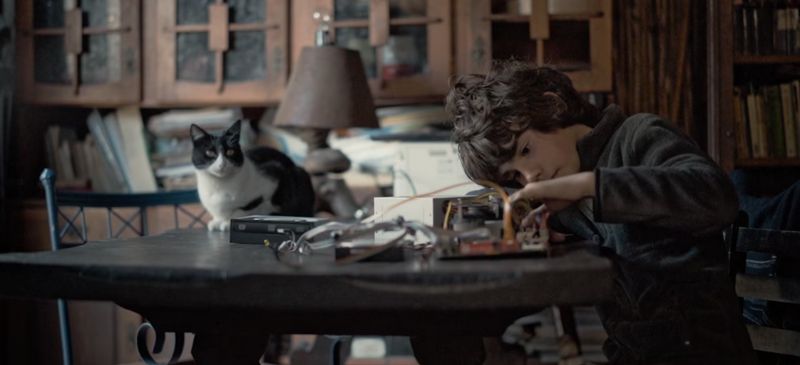
The Uruguayan documentary Soñar Robots (Dreaming of Robots), directed by Pablo Casacuberta, has taken a new step in its international trajectory by joining the distribution catalog of Deutsche Welle (DW), one of the world’s leading platforms for documentary circulation. The agreement was finalized by Argentine distributor and sales agent Amashort, headed by Claudia Bertolino, opening a new global window for a production that has already demonstrated its ability to reach and engage diverse audiences.
“It is a pleasure and a source of pride to work with a company like Deutsche Welle, and we are delighted by the respect and enthusiasm they have shown for the Uruguayan film in our catalog, Soñar Robots,” Bertolino wrote on social media. She also highlighted the broader meaning of her work as a bridge between Latin American cinema and international audiences. “Latin American cinema continues to travel the world, and being a bridge that helps make that possible is what we love most.”
Amashort emphasized that the agreement with DW — a global reference in documentary distribution, with a presence in hundreds of territories and partnerships with television networks, platforms, and cultural channels — involved a special 28-minute re-edit adapted to the half-hour documentary format distributed internationally by the German broadcaster. “The inclusion of a Latin American production in this selection is a major recognition and an invaluable opportunity,” the distributor noted.
Soñar Robots explores the expansion of robotics in rural areas of Uruguay and how this small technological revolution is transforming the lives of children and young people who, from deeply local contexts, are finding pathways to the global stage. This combination of strong local roots and universal resonance has been central to the film’s international circulation. “These are films that represent Uruguay very well and tell the story of how the country connects with the world,” Bertolino said, referring both to Soñar Robots and to other Uruguayan titles she represents.
The documentary’s international journey also includes its previous sale to European airlines such as Iberia and British Airways, through negotiations supported by Uruguay XXI. This allowed the film to reach audiences worldwide via international flights. “This has incredible reach because it literally travels all over the world. I have a lot of faith in Soñar Robots: it stands out because it tells the story of children doing robotics in Uruguay’s interior and winning an international competition,” Bertolino told Uruguay XXI in 2023.
Amashort’s engagement with Uruguayan audiovisual production has deepened in recent years, both in the marketplace and on the festival circuit. Invited by Uruguay XXI, Bertolino served as a jury member at the 13th edition of the DETOUR New Film Festival, where she highlighted the sector’s vitality. “In the international industry, film schools are highly valued. In Uruguay, I saw full theaters, mentorship programs involving high schools in the interior, and young filmmakers traveling to present their short films. That is truly distinctive,” she observed.

From a market perspective, Bertolino also sees favorable conditions for the international expansion of Uruguayan cinema. “More and more Uruguayan projects are partnering with Belgium, Germany, France, or Spain. That international dimension helps with both sales and positioning. When stories are local but universal, they connect anywhere,” she said. She concluded on an optimistic note: “What is happening in Uruguayan documentary filmmaking is very powerful. If intimate stories continue to address universal themes and their international pathways are carefully planned, Uruguay is clearly on the right track.”
The arrival of Soñar Robots at Deutsche Welle confirms this outlook, strengthening the presence of Uruguayan cinema on global circuits and expanding its audiences while consolidating a national narrative that speaks to the world from a distinctly local perspective.
FEATURED NEWS:
- “Diverse and Promising”: What International Jury Members Saw in Uruguay’s Audiovisual Production at DETOUR
- The intimate character and cultural richness of Uruguayan cinema were protagonists in international short film exhibition
- Uruguayan Film “Tonga, el 34 Oriental” to be Featured on Iberia Flights