
- Home
- About us
- News
- Events
- EXPORT Export
- BUY Buy
- INVEST Invest
- COUNTRY BRAND Country Brand
-
INFORMATION CENTER
Information center
InformationCenterInformationCenterReports Country reports Department reports Foreign trade reports Product-Destination worksheet Sectors reports Work documentsStatistical information Classification Uruguay XXI Exports Imports Innovative National Effort Macroeconomic Monitor Tools Buyers Exporters Investors
- Contact
-
Languages
“I want to show the world that Uruguay has a cuisine that defines us”
With the opening of Hugo, his new restaurant in Montevideo, Hugo Soca returns to the roots of his cuisine. The Country Brand Ambassador maintains that Uruguayan cuisine has huge potential to make its mark on the world
 Publication date: 17/04/2026
Share:
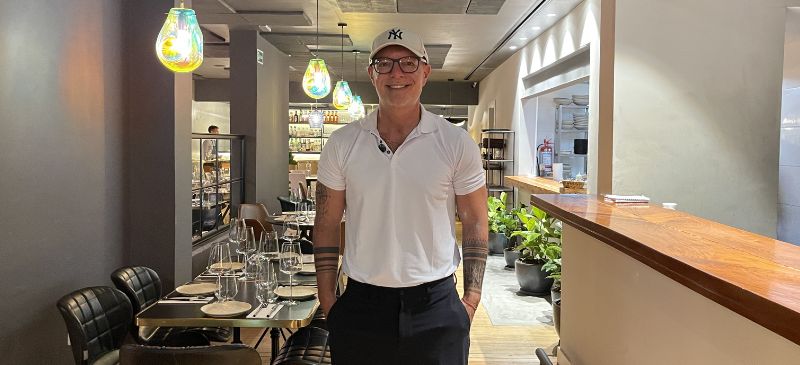
For Hugo Soca, the new restaurant that bears his name is not just a culinary venture or a new business step. Above all, it is a synthesis. A space where his life story, his cooking style, his aesthetic, and his way of telling the story of Uruguay all come together.
“This project is the culmination of everything I’ve been working on, everything I’ve been sharing over the years through cooking and communication,” he says. And he immediately expands on the idea: hugo is not just a restaurant, but a home open to others to highlight Uruguayan identity through its products, producers, cuisine, and the essence of family.
Soca is also a Country Brand Ambassador, a role through which he promotes Uruguay’s identity and values via gastronomy. From this perspective, his work not only highlights local cuisine but also domestic production, the connection to the land, and the culture expressed in every dish.
His restaurant hugo traces back to a story that began long before professional cooking. It began in the countryside, as he himself recounts, with a child crawling among the earth, grass, wood, stone, and the wilderness. In a home without electricity or running water, where the wood-fired oven and well water were part of daily life. In a childhood marked by farm work, direct contact with animals, the vegetable garden, homemade cheeses, and cooking from scratch.
In his account, the restaurant is filled with these references. The bay laurel plant at the entrance, for example, recalls the first herb he remembers planting as a child, but also serves as an emblem of home cooking, of Sunday stews, of that domestic memory he seeks to recapture. The wood-fired ovens evoke his grandmother’s cooking and his childhood; the wood, stone, and gray tones of the space resonate with the country’s interior, with the earth and the rural landscape. Even the house itself—a 1920s building with its original staircase preserved—was conceived as part of the narrative.
For Soca, every project must tell a story, and in this case the story is his own, but also that of a deep, productive, and affectionate Uruguay.
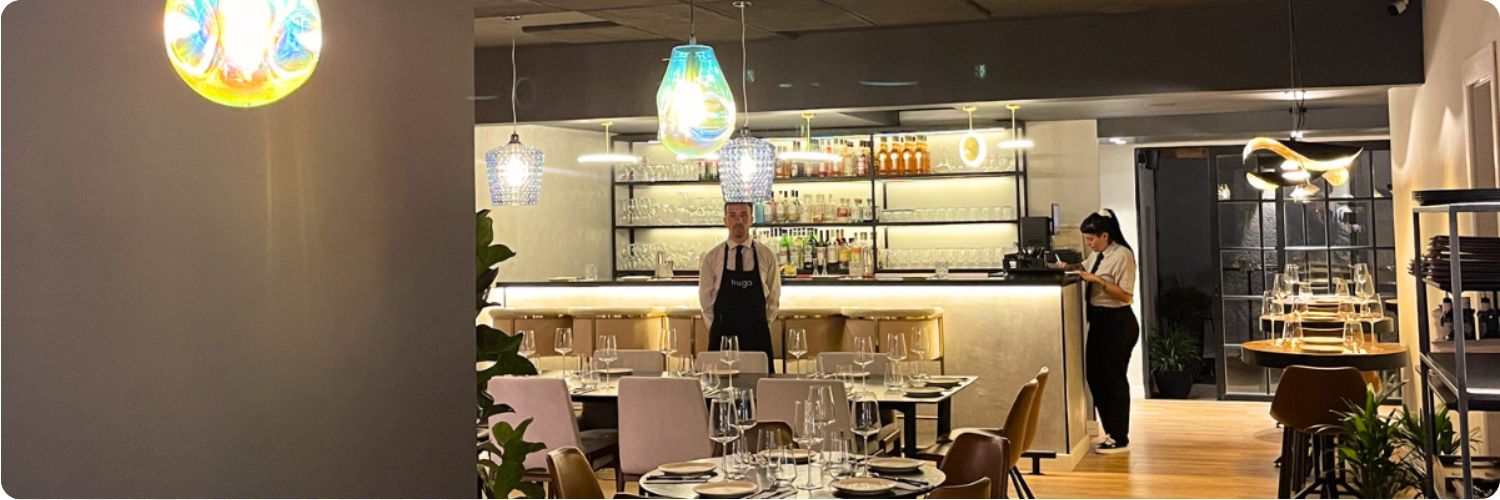
The culinary concept reflects that same idea. Far from a gastronomy conceived exclusively in terms of sophistication or trends, Soca insists on a cuisine of memory—intimate and emotional. The enduring popularity of seemingly simple dishes, such as fritters, rice pudding, pancakes with dulce de leche, cannelloni, or stews, confirms, in his view, that there is a culinary identity deeply rooted in the experience of the home.
“The best-selling items have always been the buñuelos. And for desserts, rice pudding,” he says. He doesn’t mention this as a commercial curiosity, but as evidence of something deeper, because these dishes trigger memories, emotions, and family scenes that remain alive in the collective memory. “Rice pudding moves people; rice pudding stirs the soul,” he asserts.
For Soca, this cuisine is also a way of thinking about the country. As a Country Brand ambassador, he believes that gastronomy can and should occupy a more prominent place in how Uruguay presents itself to the world. And here lies a central conviction of his discourse: that Uruguay has for too long been communicated almost exclusively through meat, and that its gastronomic richness is far broader and more diverse.
“Obviously, we have spectacular meat. But that’s already common knowledge,” he notes. In his view, the challenge lies in also showcasing everyday cuisine, dairy products, wines, artisanal cheeses, coastal products, stews, sausages, traditional sweets, and, above all, the human fabric behind each product.
At this point, his perspective on gastronomy becomes inseparable from his advocacy for rural producers and small entrepreneurs. With hugo, he explains, he didn’t just want to give space to the cuisine; he wanted to give space to domestic production. “hugo gives space to the rural producer, the dairy farmer, the winemaker; it gives space to those who make products so that people can enjoy our country,” he says of the restaurant.
His work on *De la tierra al plato*, the television program that has been touring Uruguay for ten years, solidified that perspective. There, he notes, he not only got to know the country’s products and recipes firsthand, but also the people behind them: entrepreneurs, producers, chefs, and families from every department. That experience reinforced his conviction that Uruguay possesses a wealth of agricultural and gastronomic resources that Uruguayans themselves are often unaware of.
“Many people are surprised when I introduce a producer or a small entrepreneur and say, ‘Oh, all that in Uruguay?’ Yes, in Uruguay we have that, and we have much more,” he affirms.
In his view, cuisine has a unique power to tell that story. Because it’s not just seen or tasted—it’s also narrated. It’s conveyed through a recipe, a conversation, an image, a memory. That’s why he insists that gastronomy can serve as a powerful tool for positioning Uruguay on the international stage.
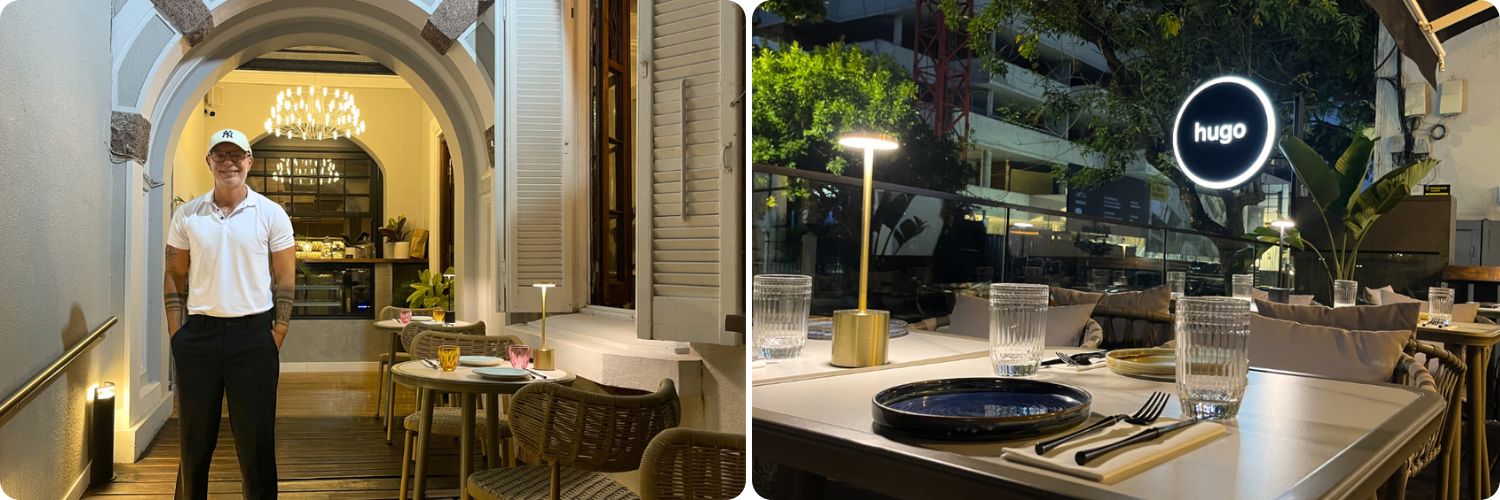
“Cooking is emotion, cooking is sensitivity, and cooking tells a story,” he sums up. When he speaks of a dish born in his childhood—of fritters made with vegetables from the garden, freshly laid eggs, milk milked that morning, and lard heated in the wood-fired stove—he isn’t just describing a recipe; he’s telling the story of a country, a material culture, a connection to the land, and a way of inhabiting the territory.
That is why, when he thinks about what a foreign visitor should discover upon entering hugo, the answer goes beyond flavor. He would like them to discover the value of family, the country’s identity, the diversity of its produce, and the closeness to those who make it possible. In Uruguay, he emphasizes, just a few kilometers from a city, you can already find rural producers, wineries, dairy farms, and small-scale operations. That scale, that proximity, and that authenticity are also part of the country’s experience.
“I want diners to take away the understanding that Uruguay has an identity, that Uruguay has a national production,” he says.