
- Home
- About us
- News
- Events
- EXPORT Export
- BUY Buy
- INVEST Invest
- COUNTRY BRAND Country Brand
-
INFORMATION CENTER
Information center
InformationCenterInformationCenterReports Country reports Department reports Foreign trade reports Product-Destination worksheet Sectors reports Work documentsStatistical information Classification Uruguay XXI Exports Imports Innovative National Effort Macroeconomic Monitor Tools Buyers Exporters Investors
- Contact
-
Languages
Uruguay showcased the capabilities of its medical cannabis industry to Brazilian authorities
An ANVISA delegation visited national companies and institutions to learn about the productive, scientific, and regulatory ecosystem
 Publication date: 02/07/2026
Share:
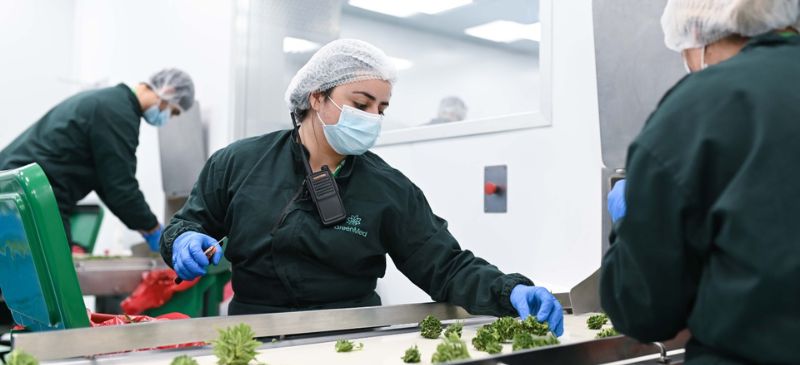
A technical delegation from Brazil’s National Health Surveillance Agency (ANVISA)—the authority responsible for regulating medicines and medical devices in that country—carried out a series of activities in Uruguay to strengthen the exchange of experiences and deepen understanding of Uruguay’s medical cannabis ecosystem. The mission included visits to companies and institutions linked to the sector, where its members were able to gain insight into the production, scientific, and regulatory capabilities that support the development of this industry in the country.
The visit was coordinated by the Ministry of Public Health, through the Medical Cannabis Access Program, with support from the Ministry of Industry, Energy, and Mining; the Ministry of Foreign Affairs; Uruguay XXI; the Canelones Municipal Government; the Institute for the Regulation and Control of Cannabis (IRCCA); and the Chamber of Medical Cannabis Companies (CECAM). During the week, the delegation toured Fotmer Life Sciences, Molemix Laboratorios, GreenMed, Grünelabs, and the CASMU Medical Cannabis Clinic, in addition to participating in technical exchange sessions on regulation, production, and best practices.
The agenda also included a workshop on the regulatory framework for medical cannabis between Uruguay and Brazil, held at the Ministry of Public Health and opened by Minister Cristina Lustemberg, Undersecretary Leonel Briozzo, and Undersecretary Daniel Olesker of the Ministry of Industry, Energy, and Mining. During the event, officials and experts from both countries presented the progress made in their regulatory frameworks and exchanged experiences regarding regulation, oversight, and the sector’s development.
The activities began at the Pando Science and Technology Park, a space that brings together the public sector, academia, and businesses, and which has supported the development of the cannabis industry since the early years of Uruguay’s regulatory framework.
During the opening ceremony, Martín Mercado, Deputy Executive Director of Uruguay XXI, recalled that four years ago, the agency and the Canelones Municipal Government began promoting the medical cannabis sector internationally, focusing from the outset on the Brazilian market. “From the very beginning, we set out to work with Brazil, and one of our goals was to organize meetings and engage in dialogue with ANVISA. Four years later, we are fortunate to have reached this stage,” he noted.
Mercado also emphasized that, despite the changes the industry has undergone internationally, companies based in Uruguay have managed to establish themselves based on unique strengths. “The main strength of companies based in Uruguay is product quality,” he stated, adding that the country “offers a legal framework and investment promotion ecosystem that has provided stability to companies in the sector.”
Along the same lines, Sebastián Vázquez, Director General of Economic Development for the Canelones Municipal Government, highlighted the department’s sustained efforts to promote innovation-intensive sectors—including medical cannabis—through initiatives such as the Pando Science and Technology Park and the recently created Innovation District. For her part, Gabriela Schroeder Barredo, president of the Pando Science and Technology Park, emphasized that one of the park’s main objectives is to strengthen collaboration between companies, academia, and the public sector to accelerate innovation processes.
During the technical tours, the delegation learned about various production models developed in Uruguay and visited leading companies in the sector. Two such visits were to Grünelabs, which presented an integrated production model ranging from indoor cultivation to the production of extracts and pharmaceutical products, and to Fotmer Life Sciences, where the delegation learned about the development of medical cannabis medications in accordance with international pharmaceutical standards, as well as the certification and quality control processes that support their commercialization in international markets.
Edelma Ros, coordinator of the Ministry of Public Health’s National Program for Access to Medical and Therapeutic Cannabis, emphasized that the mission took place at an opportune time for technical exchange, given that both Uruguay and Brazil are making progress in updating their regulatory frameworks for medical cannabis.
Uruguay XXI’s participation in this mission is part of its strategy to promote knowledge-intensive, high-value-added sectors internationally by strengthening ties with strategic markets and supporting companies in their internationalization processes.