
- Home
- About us
- News
- Events
- EXPORT Export
- BUY Buy
- INVEST Invest
- COUNTRY BRAND Country Brand
-
INFORMATION CENTER
Information center
InformationCenterInformationCenterReports Country reports Department reports Foreign trade reports Product-Destination worksheet Sectors reports Work documentsStatistical information Classification Uruguay XXI Exports Imports Innovative National Effort Macroeconomic Monitor Tools Buyers Exporters Investors
- Contact
-
Languages
“Uruguay combines stability, talent, and a business culture that is open to the world”
Vesta Group, part of Constellation Software, has established Uruguay as its regional hub and completed seven acquisitions in the country
 Publication date: 04/06/2026
Share:
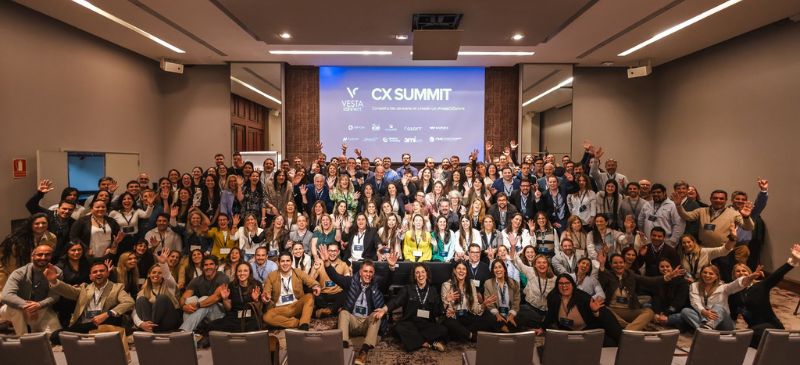
When Vesta Software Group CEO Richard Clancy visited Uruguay to learn about the local operations of Greycon—a British company acquired by the group—he had no idea that trip would mark the beginning of a regional expansion from Montevideo. What began “by chance,” as Jerónimo Álvarez, Portfolio Leader at Vesta Latam, describes it, ultimately led Uruguay to become the group’s main platform for growth in Latin America.
Vesta is part of Constellation Software, a Canadian conglomerate that has acquired approximately 1,500 companies worldwide. Since 2020, the group has completed seven acquisitions in Uruguay: GeneXus Consulting, K2B, Datalogic, Uruware, GSoft, Nodum, and Geocom. It has also designated the country as its primary regional hub for Latin America.
“We decided that Uruguay would be our gateway to Latin America and home to our main regional hub,” said Álvarez. Today, several of the hub’s core services operate from Uruguay, supporting Vesta’s growing presence across the region.
The company’s growth is also reflected in its workforce. “The team based in Uruguay has grown significantly in recent years, both through acquisitions and organic growth. In 2021, we were a team of four; today, we have more than 700 employees,” he noted.
In an interview with Uruguay XXI, Álvarez discussed the reasons behind the company’s commitment to Uruguay, the evolution of its operations, and the role Uruguayan talent plays in Vesta’s regional expansion.
Why did Uruguay become an attractive destination for Vesta’s investment and expansion strategy in Latin America?
—We began exploring Uruguay’s software ecosystem, and several things immediately caught our attention. First, it is a very stable and predictable country in which to do business, something that is extremely important for any international group. At the same time, we found a highly mature technology ecosystem, with well-managed companies, strong talent, and a very international mindset.
Uruguay has also developed a very favorable framework for the technology industry, with clear incentives for software exports and global services. Combined with stability and talent, this creates very attractive conditions for a long-term investor like us.
How has Vesta’s presence in Uruguay evolved since its first acquisitions?
—The evolution has been very natural and very positive. We started with a few targeted acquisitions while getting to know the ecosystem, and over time Uruguay came to play a much more significant role within Vesta Latam.
Today, not only do we have companies operating from Uruguay, but we also have regional teams, leadership, and capabilities serving multiple markets from here. This growth has been driven by the confidence we have built in the country and its talent.
We completed our first two acquisitions—GeneXus Consulting and K2B—in October 2021, and we have continued expanding ever since.
What role does Uruguay play within the group’s regional strategy today?
—Uruguay is the center of our regional hub for Latin America, and many of the core services that support the Vesta ecosystem across the region operate from here.
Our approach is quite unique because we do not seek to centralize everything or fully absorb the companies that join the group. We strongly believe in a decentralized model in which each company maintains its identity, culture, and operational independence while leveraging the Vesta ecosystem to grow faster.
This creates significant value, particularly when it comes to regional expansion. Uruguay plays a key role in that strategy because it combines talent, stability, and a strong ability to coordinate regional operations.
What aspects of Uruguay’s technology ecosystem do you consider most valuable?
—First, the quality of the people and their technical capabilities. Second, the professionalism with which many local companies operate. And third, their ability to build products with a global vision.
We also see a highly collaborative ecosystem, with talented entrepreneurs, skilled technical professionals, and a long-term mindset that we value greatly.
You have often highlighted the quality of Uruguayan talent. What stands out about local teams?
—Uruguayan talent offers a very interesting combination: a strong technical foundation, adaptability, and a highly professional way of working.
In addition, local teams tend to be highly autonomous and capable of solving complex problems. Today, Uruguayan professionals are leading projects and products that have an impact across multiple markets in the region.
During our time in Latin America, we have identified high-potential talent within our companies and promoted them into key roles. We have also recruited Uruguayan professionals to join our regional hub and support the growth of the companies we have acquired, both in Uruguay and across Latin America.
What does Vesta’s growth in Uruguay say about the evolution of the country’s technology ecosystem?
—I think it shows that Uruguay has moved beyond being simply an interesting market and has become a truly established technology ecosystem.
Today, Uruguayan companies are developing global products, exporting services, and competing internationally at a very high level. That speaks to a remarkable degree of maturity.
We also see significant opportunities for continued growth in software development, artificial intelligence, product management, customer success, and regional operations.
Uruguay has the conditions to further consolidate itself as a hub from which technology and knowledge are exported to international markets.
What are your plans for continuing to invest in Uruguay?
—We continue to see attractive opportunities in Uruguay and maintain a long-term vision for the country.
We remain interested in identifying companies with strong products, solid teams, and international growth potential.
What message would you give to other international companies considering investing in Uruguay?
—I would tell them that Uruguay is a country where it is truly possible to build for the long term. There is talent, stability, and a very robust technology ecosystem.
For technology and service companies, it is an excellent place from which to grow regionally and develop globally oriented operations.
Uruguay combines several factors that do not always go hand in hand: stability, talent, quality of life, and a highly favorable framework for technology companies and service exporters. For companies with a long-term vision, it is a very competitive place to grow.
Today, Uruguay is a very important part of our regional strategy—not only because of the companies that are part of the group, but also because of the talent and capabilities that have been developed here.
For us, it was a strategic decision that clearly paid off, and we continue to see tremendous potential in the country.
“Uruguay has moved beyond being simply an interesting market and has become a truly established technology ecosystem.”