
- Home
- About us
- News
- Events
- EXPORT Export
- BUY Buy
- INVEST Invest
- COUNTRY BRAND Country Brand
-
INFORMATION CENTER
Information center
InformationCenterInformationCenterReports Country reports Department reports Foreign trade reports Product-Destination worksheet Sectors reports Work documentsStatistical information Classification Uruguay XXI Exports Imports Innovative National Effort Macroeconomic Monitor Tools Buyers Exporters Investors
- Contact
-
Languages
What keeps Nestlé investing in Uruguay after 50 years? Trust, talent and long-term vision
The company points to stability, talent and industrial excellence as drivers of growth.
 Publication date: 10/06/2026
Share:
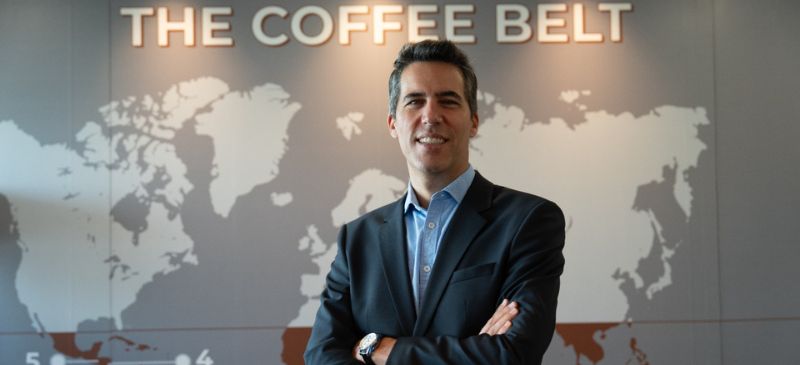
Five decades after arriving in Uruguay, Nestlé continues to deepen its commitment to the country. What began as an operation focused on the local market has evolved into a regional production and export hub, manufacturing products for international markets under some of the world’s most recognized brands.
For Nestlé Uruguay Country Manager Santiago Casas, the reason behind this enduring presence and sustained growth can be summed up in a single word: trust.
“I would sum it up with the word ‘trust.’ Trust in the country, in its people, and in the value of building for the long term,” he said.
Institutional stability, investment predictability, a highly skilled workforce, and a shared vision for development have been key factors behind the company’s uninterrupted industrial presence in Uruguay for the past 50 years.
“Uruguay has provided us with a stable environment in which to invest and grow, and that has been fundamental to developing our production capabilities and local talent over time,” said Casas.
From a local operation to an export platform
The evolution of Nestlé Uruguay also reflects the country’s productive transformation. While the company initially focused on supplying the domestic market, today it forms part of regional and global value chains.
According to Casas, the ability to adapt to increasingly demanding industrial, technological, and quality standards made that transition possible.
“We went from being an operation focused on the domestic market to becoming a production and export platform that manufactures high-value products for leading global brands,” he said.
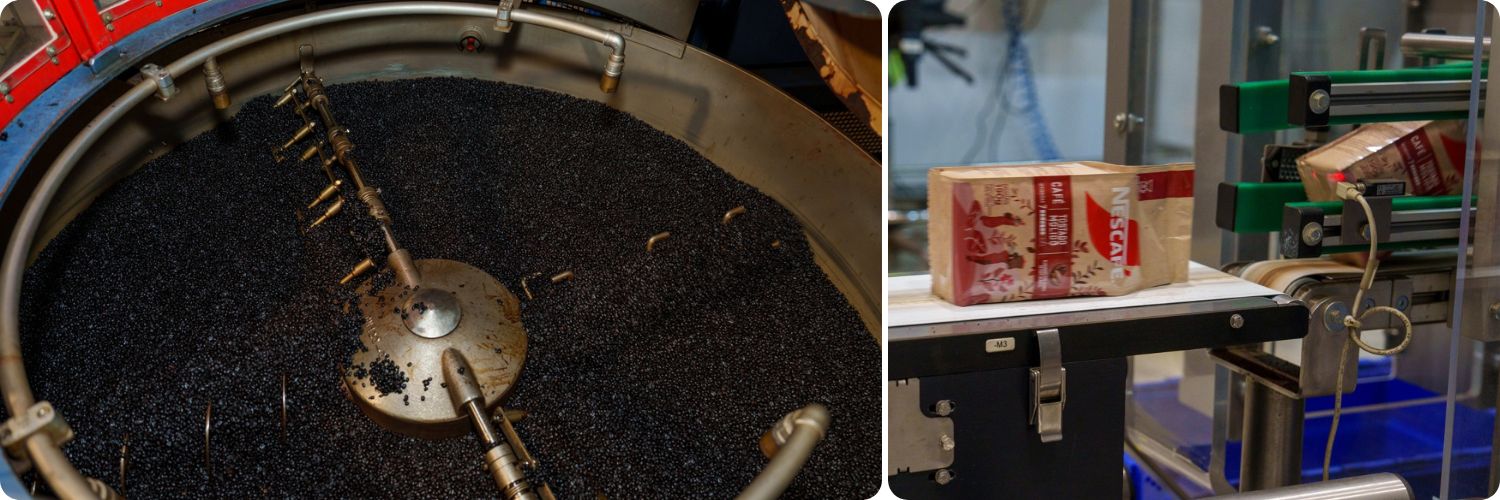
This transformation was consolidated through a US$40 million investment in a state-of-the-art facility located in the Zona Este Industrial Park in Canelones. From there, Nestlé produces instant coffee, roasted and ground coffee, chocolate powders, and other product lines for both the local market and international destinations.
The decision to establish this operation was driven by a combination of stability, talent, infrastructure, and long-term vision.
“Uruguay offers the conditions needed to develop a world-class plant capable of integrating production, logistics, and management under international standards, while serving as a regional hub of industrial excellence,” said Casas.
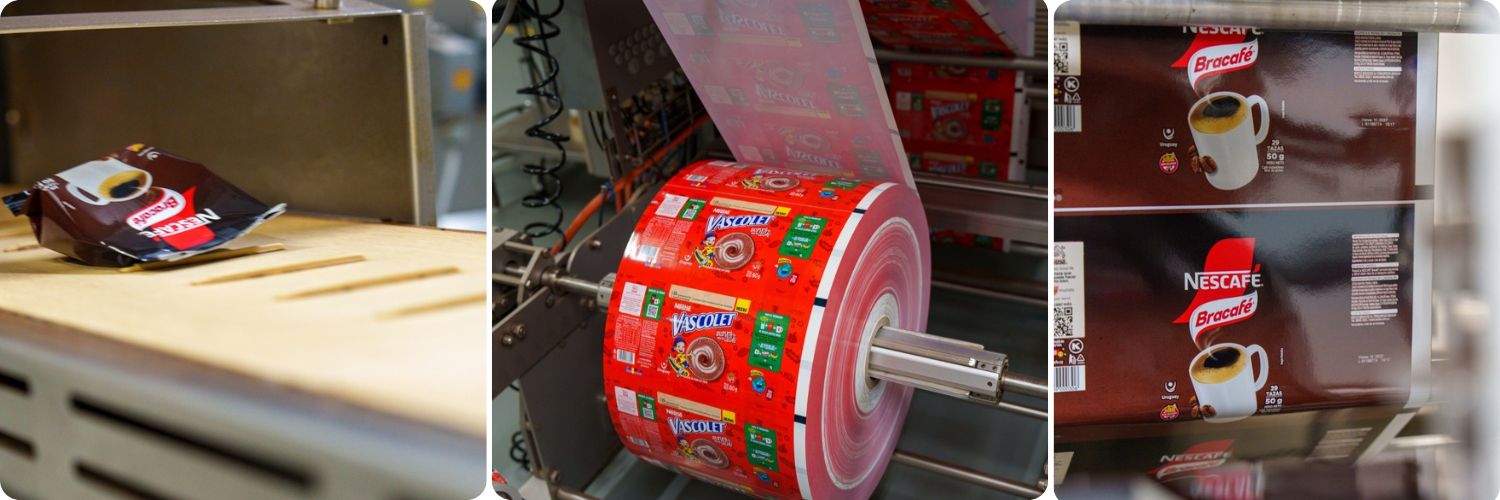
The facility manufactures iconic brands for Uruguayan consumers, including Vascolet, El Chaná, Bracafé, Copacabana, Águila, and Cacao Los Monjes, as well as premium products with global reach.
“The fact that products such as Starbucks At Home and Nescafé Gold are manufactured in Uruguay for international markets is the result of years of investment, innovation, and an industrial culture focused on excellence,” he said.
World-class capabilities developed in Uruguay
For Nestlé, one of the company’s greatest achievements over the past five decades has been the development of industrial capabilities that are now recognized throughout the organization worldwide.
“The development of world-class industrial capabilities in Uruguay demonstrates that the country can compete in sophisticated manufacturing processes through innovation and continuous improvement,” said Casas.
For the company, this performance is closely linked to the qualities of Uruguayan talent.
“Uruguayan talent stands out for its technical expertise, commitment to quality, and openness to innovation. These are people who constantly challenge themselves to think differently, explore new ways of doing things, improve processes, and adopt new technologies,” he said.
That recognition extends beyond production. Today, Uruguayan teams help train employees at other Nestlé facilities around the world, exporting knowledge and best practices developed locally.
This journey received further recognition in 2024, when the company obtained the Marca País Uruguay license, a distinction that, according to Casas, reflects attributes built over decades of work.
“It has significant strategic value because it validates the quality of our processes across the entire value chain and reflects values to which we are deeply committed: sustainability, leadership in management, and export capacity,” he said.
For Nestlé, obtaining the Marca País license represents more than institutional recognition; it also validates values that are central to its global strategy and contribute to Uruguay’s international positioning.
According to Casas, these attributes enable a local operation to compete in increasingly demanding international markets while building trust among clients, consumers, and strategic partners.
In this regard, he believes the seal helps strengthen the reputation of companies operating from Uruguay and reinforces confidence in international markets.
A signal for new investors
From the perspective of a multinational company with a global presence, Nestlé’s experience sends a clear message about the capabilities Uruguay offers for sophisticated, long-term investment projects.
“When a global company chooses to produce in Uruguay, it demonstrates that the country has the productive capabilities, talent, and ecosystem needed to integrate into global value chains and compete in demanding segments,” he said.
The company recognizes that Uruguay has opportunities to further strengthen its position as a regional hub for specialized production, particularly through talent development, technology adoption, and collaboration between the public and private sectors.
After 50 years in Uruguay, Nestlé continues to find the conditions needed to grow, innovate, and reach international markets. It is a track record built on investment, capability development, and value creation—one that reflects the attributes embodied by the Uruguay Country Brand and underpins the company’s long-standing commitment to the country.