
- Home
- About us
- News
- Events
- EXPORT Export
- BUY Buy
- INVEST Invest
- COUNTRY BRAND Country Brand
-
INFORMATION CENTER
Information center
InformationCenterInformationCenterReports Country reports Department reports Foreign trade reports Product-Destination worksheet Sectors reports Work documentsStatistical information Classification Uruguay XXI Exports Imports Innovative National Effort Macroeconomic Monitor Tools Buyers Exporters Investors
- Contact
-
Languages
A round aimed at breaking down barriers: Cosquín Rock’s networking event connected Uruguayan music with programmers from across the region
In the run-up to Cosquín Rock Uruguay, an event organized by Uruguay XXI brought together music programmers from Brazil and Argentina with managers of Uruguayan bands and artists, as part of an ongoing effort to promote Uruguayan music internationally
 Publication date: 27/03/2026
Share:
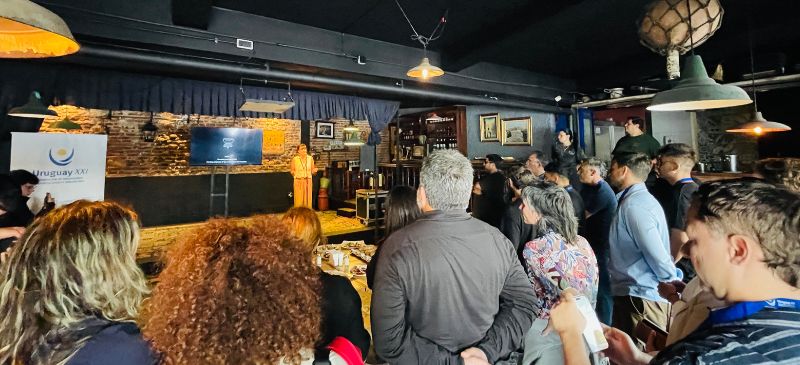
Even before the stages of Cosquín Rock Uruguay came alive, music had already begun to build bridges. At the iconic restaurant Lo de Silverio, in a relaxed atmosphere yet with very specific goals in mind, Uruguay XXI brought together festival programmers, venue operators, and distribution platforms from Brazil and Argentina with artist managers and Uruguayan bands for a networking event designed to turn contacts into opportunities.
The event once again showcased a strategy the agency has been developing alongside the festival organizers to capitalize on the concentration of Uruguayan talent in the Cosquín Rock lineup and bring together those who shape programming across the region. Since live music remains a decisive factor when selecting artists, the festival offers a prime setting to showcase Uruguayan bands to their audience, the event organizers agreed.
As part of this preparation, programmers receive a digital catalog of Uruguayan artists participating in the festival in advance—a key tool for laying the groundwork for discussions that are then explored in greater depth during the event. The material includes detailed information on each project, allowing for an initial curation process before arriving in Uruguay and optimizing exchanges during the in-person event.
“This mission, in which we bring international guests, is the most valuable for the music sector, because it is very difficult for programmers to see bands performing live in front of their audience,” explained Omaira Rodríguez, a creative industries specialist at Uruguay XXI, as she opened the session.
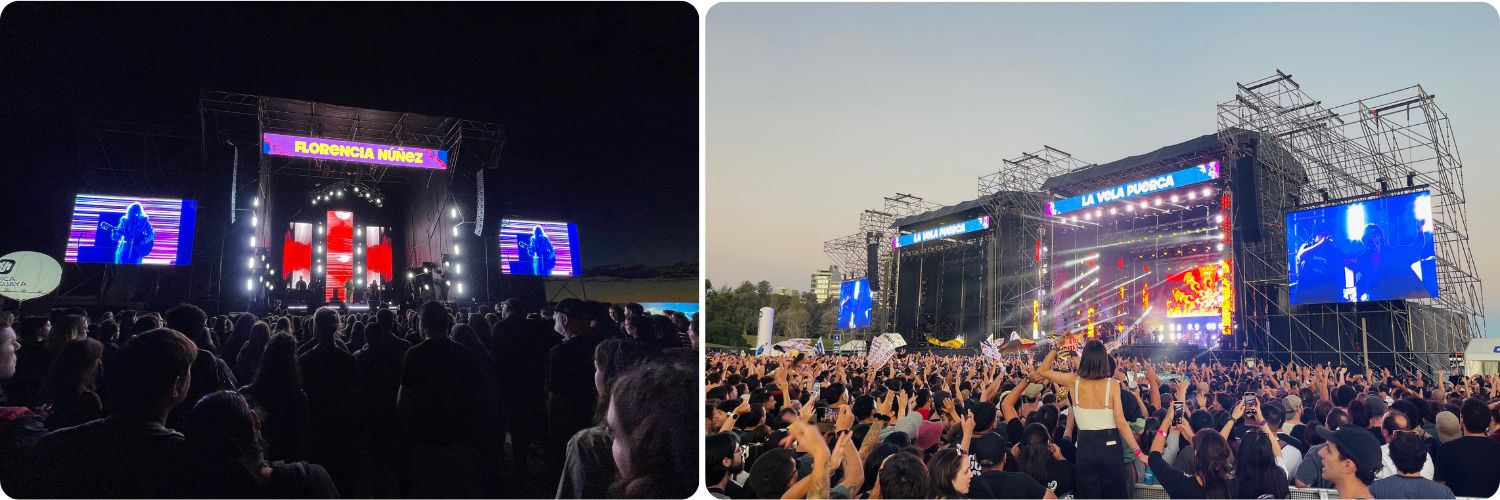
Rodríguez noted that this format has already proven its worth. Following an initial pilot in 2019, the initiative has established itself in recent years as a tool for the internationalization of the music industry. The choice of Lo de Silverio also had both symbolic and practical significance: a cozy venue for the local scene that served as the ideal setting for an exchange that was more personal than formal. “The idea is for it to be a relaxed gathering where band managers, band representatives, and artists from Uruguay can talk with festival programmers,” Rodríguez summarized.
Camilo Sequeira of the production company Piano Piano, a co-organizer of the event, emphasized the strategic value of this opportunity within the festival. “We consider this event essential. Year after year, it’s another small contribution we can make through our work to help create new opportunities for Uruguayan artists,” he stated.
For Sequeira, the key difference lies in the direct experience. “The chance for our programmer friends to see all the projects live is unparalleled,” he said. He added that the work doesn’t end with the round of meetings: “You have to be patient, you have to follow up, but above all, you have to build connections. This is a profession built on human connections,” he said.
That spirit permeated the presentations by the international guests, who discussed not only the scale and profile of their venues but also their willingness to build long-term relationships with the Uruguayan scene.
From Brazil, Camila Casseano presented the scope of SESC São Paulo, one of the most important cultural institutions in the neighboring country. “SESC is a very large institution in Brazil,” she explained, before noting that in the state of São Paulo alone they have 43 operational units and that in 2025 they organized “more than 5,000 musical events for over a million people.”
Her participation is part of the partnership that Uruguay XXI has been developing with the SESC centers, which had already sent representatives to the 2024 edition of the festival. On this occasion, her visit also helped expand institutional contacts, as Casseano held a meeting with the National Institute of Performing Arts during her stay in Uruguay to explore future avenues for exchange and cooperation.
In his speech, Casseano highlighted the ongoing collaboration with Uruguay. “This year we will host a concert by Florencia Núñez.” This exchange is part of a Uruguay XXI initiative promoting the international visibility of the artist who won the Graffiti Award for Best Female Soloist, which will now be featured in the SESC program.
Felipe Franca González, from Difusa Fronteira, recalled exchange experiences with Uruguayan and Brazilian artists and highlighted how much the circulation of Latin American music in Brazil has changed over the last decade. “These meetings allow us to experience this cultural exchange,” he said.
From Argentina, Noel Yolis, artistic director of Ciudad Cultural Konex, showcased another key platform for artists in the region: a private venue with a strong identity, its own programming, and a capacity for 3,000 people right in the heart of Buenos Aires. “We have been a home for Uruguayan artists for many years,” she stated. Agarrate Catalina, Cuarteto de Nos, Cuatro Pesos de Propina, and La Vela Puerca were some of the names she mentioned while reviewing that connection. “The idea is to keep doing this, so we also appreciate this space for new opportunities to emerge,” she noted.
Flor Donini, from Boomerang, offered the perspective of a young agency already embedded in an international network of festivals, artist representation, and booking, and particularly valued the space created in Montevideo. “These are great opportunities to build networks and deepen the goals we each have here,” she said.
Other Argentine guests shared this view. Eduardo Sempé, from Rock y Reggae Producciones, who also works with venues in Buenos Aires and Madrid, emphasized the importance of maintaining these connections over time and highlighted his decision to travel specifically to participate in the meeting. Guillermo Montironi, from Asfalto Producciones, echoed this sentiment by stressing that these processes require perseverance. “Things often don’t happen overnight, but you have to start working, you have to start building connections, you have to start understanding the needs,” he said.
His testimony was particularly valuable because it brought to light concrete results that had emerged from these meetings. Montironi recalled that, as a result of meetings in previous years, he was able to organize three shows by Rubén Rada in Argentina.
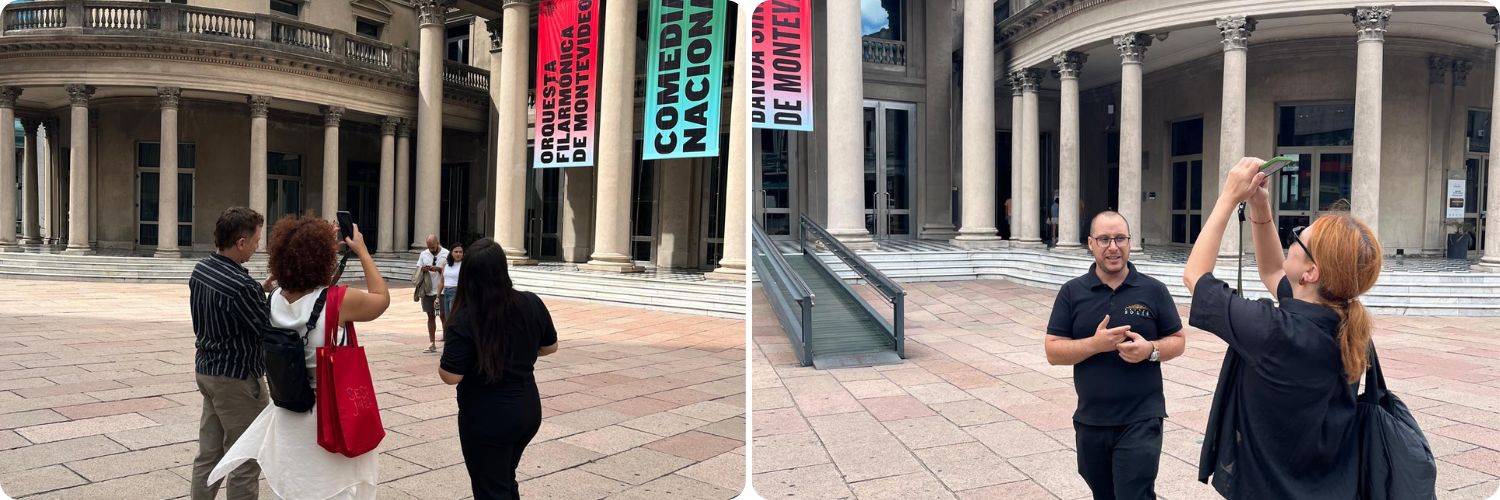
As part of the schedule of activities, the programmers also took part in a guided tour of the Solís Theater, organized in collaboration with the Montevideo City Government’s Department of Culture—an opportunity that allowed them to experience another of the country’s iconic cultural venues.
Thus, in the run-up to the festival, the event reaffirmed that the internationalization of Uruguayan music also takes place in these venues, which forge connections that can lead to new opportunities for national artists.