
- Home
- About us
- News
- Events
- EXPORT Export
- BUY Buy
- INVEST Invest
- COUNTRY BRAND Country Brand
-
INFORMATION CENTER
Information center
InformationCenterInformationCenterReports Country reports Department reports Foreign trade reports Product-Destination worksheet Sectors reports Work documentsStatistical information Classification Uruguay XXI Exports Imports Innovative National Effort Macroeconomic Monitor Tools Buyers Exporters Investors
- Contact
-
Languages
Bajofondo's new album reaffirms Uruguay's contribution to the global music scene.
The collective presents “Ohm," an album that revisits the history of electronic music from a contemporary perspective, under the creative direction of Uruguayan artists Juan Campodónico and Luciano Supervielle—Marca País ambassadors—and featuring Hugo Fattoruso.
 Publication date: 29/04/2026
Share:
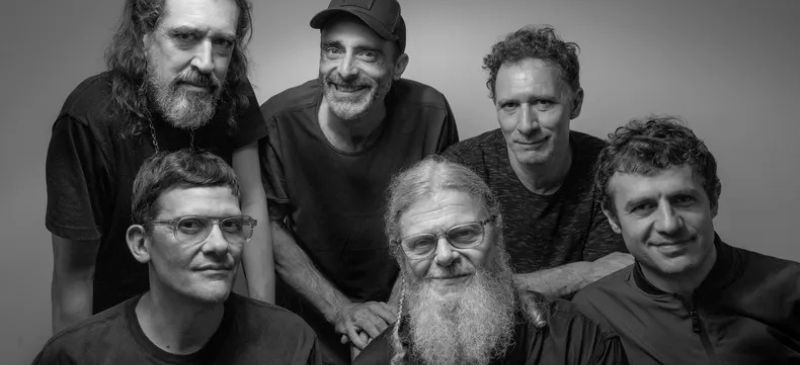
Twenty-five years after its founding, Bajofondo once again reinvents its artistic language with Ohm, an album that not only marks a new chapter in its history but also showcases to the world a cultural identity deeply rooted in the Rio de la Plata (River Plate) region. At the heart of this creative endeavor is Uruguay, represented by Juan Campodónico and Luciano Supervielle—founding members of the project—and Hugo Fattoruso, who was invited to participate in this new work. The three are also ambassadors for Marca País Uruguay and reflect the link between artistic excellence and the country’s international profile.
The collective, which also includes Gustavo Santaolalla alongside Uruguayan musicians Gabriel Casacuberta and Martín Ferres, as well as Javier Casalla and other collaborators, has, since its inception, developed a sound that blends tradition and the avant-garde. In Ohm, that identity is reimagined through electronic music, in a work that engages with the region’s musical roots and transforms them into new forms.
An album that rewrites its own language
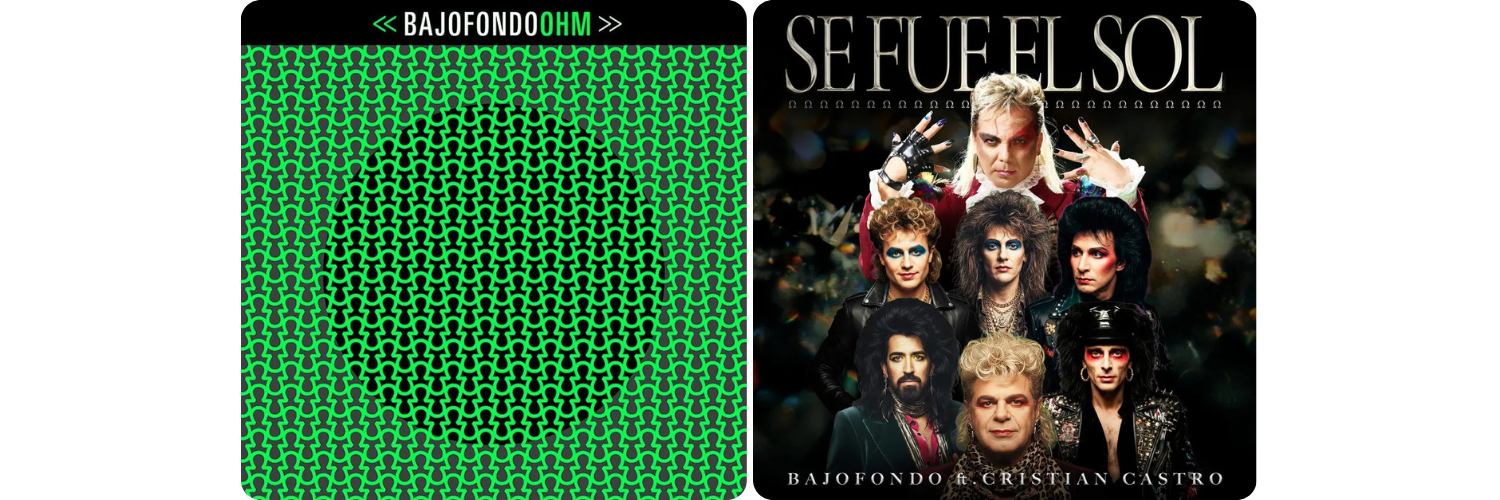
The starting point for Ohm was almost an internal provocation. “Alright then, let’s make an electronic tango album,” the members joked, revisiting a label they had avoided for years because they considered it reductive. However, that gesture opened the door to a deeper exploration: returning to electronic music, not as a trend, but as history, as a language, and as a field of experimentation.
Thus, the album was constructed as a journey through different stages of electronic music, from its analog origins to its contemporary expressions, using vintage synthesizers and technologies to recover textures and creative processes. The result was a conceptual work that, rather than being pigeonholed into a genre, offers a broad sonic experience.
The album’s title encapsulates this approach. Ohm refers to the unit of measurement for electrical resistance—a central concept in electronic circuits—and, at the same time, functions as a metaphor for creative resistance. In a context marked by automation and artificial intelligence, the album takes a stand: to use technology as an expressive tool and not as a substitute for the artistic process.
Although Bajofondo emerged and was associated with a contemporary reinterpretation of tango, its evolution has been deliberately expansive. In Ohm, this breadth translates into a cross-pollination of references ranging from classic electronic and electropop to sounds linked to digital culture and video games, without losing the River Plate pulse that runs through all their work.
A Rio de la Plata sound with Uruguayan DNA
The essence of Bajofondo is built on a fusion rooted in the traditions of the Rio de la Plata—such as tango, milonga, and candombe—which serve as its starting points, integrated with contemporary musical languages and an openness to diverse influences. In this regard, the Uruguayan contribution is decisive.
In that sense, Luciano Supervielle emphasized that the project’s identity is built on that cultural crossroads. “Bajofondo is a band that has always been characterized by blending influences from Argentine culture—more specifically, Buenos Aires—and Uruguayan culture—more specifically, Montevideo. I think that has been a defining feature of the band’s style, and on this album in particular, it comes through very clearly,” he said. The musician also highlighted the presence of elements unique to the country in Ohm. “There is a very Afro-Uruguayan influence in the style, ways of speaking, and even a type of humor that is also very much our thing, he said.
Campodónico, co-founder of the project, has built a career marked by innovation, blending sounds and producing some of the region’s most influential artists. Supervielle, for his part, blends hip-hop, classical, and electronic music, establishing a unique sonic identity. As Country Brand ambassadors, both represent a generation that has taken Uruguayan music to global stages.
“Uruguay is a country built on cultural fusion. Embracing my most Uruguayan feature was also a way to carve out a space of my own that would set me apart from other colleagues, and it has been a cornerstone of my musical language,” added Supervielle, emphasizing the value of that identity in crafting a distinct sound.
That signature sound is expanded upon in Ohm with the participation of Hugo Fattoruso, a key figure in the national music scene. His contribution to the album not only brings a unique artistic dimension but also connects different eras of Uruguayan music. “He is the first popular musician in the rock scene of the Río de la Plata and, at the same time, a pioneer in synthesizers,” Campodónico told the newspaper El País about the Uruguayan musician.
Fattoruso’s participation—as a historical figure in Uruguayan music and an ambassador for Marca País—is featured on the track “Tres empanadas”, a collaboration that encapsulates the spirit of the album. The song serves as a bridge between generations and styles, combining Bajofondo’s electronic exploration with Fattoruso’s sensibility and career, whose journey—from Los Shakers and Opa to his extensive work as a composer, multi-instrumentalist, and collaborator with artists across the region—positions him as a key figure in shaping the contemporary Río de la Plata sound.
Knowledge, experimentation, and culture that project the country
In a context where technology is redefining creative process, Bajofondo offers a critical yet constructive perspective: using these tools to enhance artistic expression.
This approach, grounded in a deep understanding of music and a constant experimental spirit, positions Campodónico and Supervielle as leaders of the Latin American vanguard, capable of engaging with global trends while maintaining their own distinct identity.
That link between identity and projection also translates into their role as ambassadors. “Representing Uruguay as a Country Brand ambassador is a great responsibility and a great honor. To feel that my work can be seen as a feature of Uruguayan identity is a source of pride, because indeed, my work contains many elements characteristic of my culture,” he notes.
And taking a broader view of the role of the cultural sector, he concluded: “Music is a very powerful marker of identity; it permeates all of society and speaks volumes about countries, about the importance they place on culture.”
Ohm is also an expression of Uruguay’s creative potential on the international stage. The presence of Uruguayan artists at the core of Bajofondo and their role as ambassadors for Country Brand reaffirms the value of culture as a tool for global outreach.